The prime minister must make the right decision

- Update Time : Sunday, August 23, 2026
- 0 Time
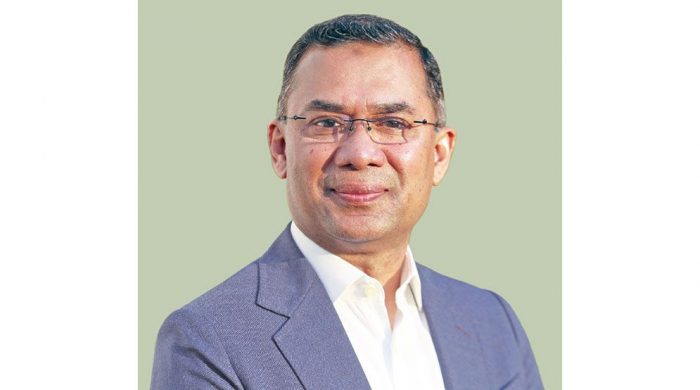
The BNP government, led by Tarique Rahman, has completed six months in power. During this period, the government has been striving to move the country forward in every sector through a new lens and dynamic vision. In today’s global reality, no nation can progress in isolation. Therefore, a balanced foreign policy is an essential prerequisite for Bangladesh’s advancement. The cornerstone of our foreign policy remains “Friendship to all, malice towards none.” Upon assuming office as prime minister, Tarique Rahman attached a new dimension to this principle: “Bangladesh First.” This means that national interests will take absolute priority in every international relationship. Simply put, Bangladesh will cultivate and advance only those foreign ties that yield tangible, positive outcomes for its people.
India’s contribution to our Great Liberation War of 1971 is undeniable. Since independence, Bangladesh-India relations have gone through various ups and downs. Following the political transformation in Bangladesh in 1975, a distance grew between the two nations. Martyr President Ziaur Rahman played a pioneering role in bridging that divide. Assuming the presidency on 21 April 1977, Ziaur Rahman visited India on 21 December that year.
Several members of his cabinet advised him against the visit. However, President Zia prioritised the interests of the people over their advice. Accepting an invitation from then Indian Prime Minister Morarji Desai, Ziaur Rahman signed the historic Ganges Water Sharing Treaty—an agreement still regarded as the most favourable water-sharing pact for Bangladesh.
In 1991, after coming to power, Begum Khaleda Zia visited India shortly after her trip to the United States, where she was received with historic honour. She visited India again in 2006. Most notably, in October 2012, Begum Zia undertook a seven-day visit to India as Leader of the Opposition, during which she was accorded the highest state honour and dignity. Apart from meeting then Prime Minister Manmohan Singh, she met India’s Foreign Minister and several key cabinet ministers and dignitaries. At the time, Jamaat-e-Islami—a key partner in the BNP-led Four-Party Alliance—urged her not to go to India, while many within the BNP offered similar advice. Yet, Begum Zia made an independent decision to undertake the visit. During the tour, she stated clearly that the BNP never engages in anti-India politics.
Both Martyr President Ziaur Rahman and Begum Khaleda Zia prioritised Bangladesh’s national interests in diplomatic relations. Ziaur Rahman extended a hand of friendship to Japan and China for infrastructure development while strengthening ties with the Middle East to open doors for manpower exports. By signing the water-sharing treaty with India, he paved the way for bilateral commercial cooperation. This is the essence of “Bangladesh First” diplomacy.
Today, Tarique Rahman—the worthy successor to President Zia and Begum Zia—serves as Prime Minister of Bangladesh. The people believe he will not accept misguided advice. We trust that, in the interest of the nation and the welfare of its citizens, he will make the right decisions based on his own judgement.
Following the political changeover in 2024, Prof Muhammad Yunus led Bangladesh’s foreign policy astray. Instead of safeguarding national interests, he used the Ministry of Foreign Affairs as a platform for his personal global publicity campaign. During the tenure of Yunus’s interim government, Bangladesh became isolated on the world stage. Upon taking charge, Yunus claimed, “The world will come to us.” In reality, the world did not come. Instead, Bangladesh was labelled globally as an unsafe and high-risk state. Except for Pakistan, Bangladesh achieved no notable diplomatic success with any other country.
Although relations with India hit rock bottom, the government failed to reduce import dependency, choosing instead to sour ties with hostile rhetoric. In a year and a half, it could not shift a single foreign visa centre from Delhi back to Dhaka, increasing hardship for students aspiring to study abroad. Most countries that previously allowed visa-free entry for Bangladeshi citizens revoked the privilege, while others drastically reduced visa approval rates. The ranking of the Bangladeshi passport plunged to levels comparable to Yemen, Afghanistan and Palestine. Despite travelling abroad 14 times in 18 months—including 11 trips in the first 12 months—the “Yunus Magic” proved a failure.
After 5 August, Yunus and his council members engaged in cheap populist, anti-India rhetoric, creating deep bitterness between the two countries. The then law adviser Asif Nazrul claimed that 2.6 million Indian citizens were working illegally in Bangladesh—a statement later proven entirely baseless and ultimately turned into a public joke. Then environment adviser Syeda Rizwana Hasan declared that all unfair agreements with India would be cancelled, yet not a single agreement was voided in 18 months. The energy adviser spoke of cancelling the Adani power purchase agreement, only to go completely silent later.
During Prof Yunus’s four-day visit to China from March 26 to 29 last year, his remarks regarding India’s “Seven Sisters” during a dialogue with Chinese business leaders at The Presidential in Beijing on 28 March sparked outrage in various circles in India. Such irresponsible comments from a head of government drew severe criticism and accelerated the decline of bilateral ties.
Consequently, India imposed restrictions on the use of its ports for Bangladeshi goods, inflicting heavy financial losses on exporters. Following 5 August, Indian visas were virtually suspended; medical visas remained open but were difficult to obtain. Meanwhile, border tensions flared periodically. Anti-India rhetoric within Bangladesh persisted throughout the Yunus administration, culminating in a severe breakdown of relations by December last year.
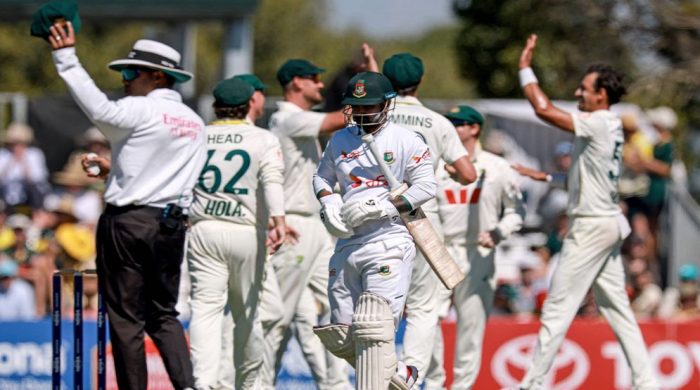
Bitterness reached such a point that Bangladesh did not participate in the Cricket World Cup held in India, adversely affecting the country’s sports arena and cricket ecosystem. This deterioration yielded no benefit for Bangladesh; rather, it tarnished the nation’s image globally. India clearly signalled that it was awaiting an elected government in Bangladesh.
The diplomatic ice began to melt following the passing of Begum Khaleda Zia. Indian External Affairs Minister S Jaishankar made a brief visit to Bangladesh to express condolences to the current Prime Minister and Begum Zia’s eldest son, Tarique Rahman. Shortly after Tarique Rahman was elected prime minister, Indian Prime Minister Narendra Modi congratulated him and expressed hope of taking bilateral relations further. Subsequently, Speaker of the Indian Lok Sabha Om Birla attended the swearing-in ceremony of Tarique Rahman’s cabinet. Modi also sent multiple congratulatory messages to Tarique Rahman on various occasions within a few days and invited him to visit India at his convenience.
India has taken several steps to improve bilateral relations. New Delhi appointed high-profile politician Dinesh Trivedi, a former minister and prominent Indian political leader, as its High Commissioner to Bangladesh. Shortly after assuming his post, High Commissioner Trivedi initiated the visa processing system for Bangladeshi citizens. The resumption of Indian visa services after an 18-month hiatus marks a major milestone in normalising ties.
The prime minister of India has invited Bangladesh’s prime minister to visit India. High Commissioner Dinesh Trivedi met Tarique Rahman to convey India’s message of advancing bilateral relations. Immediately afterwards, he met Indian Prime Minister Narendra Modi in Delhi to brief him on Bangladesh’s stance. When an energy crisis emerged, India stepped forward to support Bangladesh. The spokesperson for the Ministry of External Affairs also noted that the Indian government was considering supplying additional fuel and gas to Bangladesh. When raw green chilli prices skyrocketed in Bangladesh, India extended assistance; market prices stabilised once imports from India arrived. Both the Indian High Commissioner and the Ministry of External Affairs have assured that the Bangladesh prime minister will be accorded the highest honour during his visit to India.
All these are clear signals towards strengthening bilateral cooperation. Normal and friendly relations between the two countries are vital for the people of Bangladesh. Between neighbours, various issues and differences of opinion are natural. However, the only way to resolve them is through dialogue. Many issues can be resolved if the two Prime Ministers sit down together. There is no place for stubbornness or petulance in diplomacy. Therefore, I am optimistic that the prime minister will make the right decision. Bangladesh must safeguard its national interests at the negotiating table.
Ties between the two nations are crucial for several reasons. Bangladesh’s manufacturing sector relies heavily on India for industrial raw materials, including cotton, yarn, fabrics, chemicals, dyes, machinery and spare parts. Any disruption in supply chains will drive up production costs. Procuring alternative goods from distant markets such as China would increase freight costs, extend transit times and require larger inventory holdings. As a result, Bangladeshi industries would lose the advantage of India’s geographical proximity, making exports less competitive.
Geographically, Bangladesh is deeply interconnected with the Indian subcontinent; road, rail, waterway and cross-border trade links with India offer cost-effective access to regional markets and industrial inputs. Hostility risks disrupting these supply lines. Furthermore, Bangladesh’s access to markets in Nepal, Bhutan and Northeast India depends significantly on Indian territory and transit infrastructure. Deterioration in relations could jeopardise Bangladesh’s potential to serve as a regional connectivity and logistics hub.
Due to geographical realities, India remains an indispensable regional partner for Bangladesh. Prolonged hostility could adversely affect water sharing, energy cooperation, border management, transit and trade, forcing Bangladesh to rely on far-off partners and elevating overall business costs.
Thus, simply finding alternative suppliers will not allow Bangladesh to easily replace India. Because of Bangladesh’s geographical location, India is not merely a source of raw materials; it offers proximity, connectivity, transit and access to the broader South Asian market. Losing these advantages would increase industrial overheads and compromise competitiveness.
A weakening of security cooperation could lead to increased border conflicts, smuggling, human trafficking and irregular migration. A decline in intelligence sharing and counter-terrorism cooperation might allow cross-border militant and insurgent networks to resurface. Hostility with India could force Bangladesh to lean more heavily towards China, Pakistan, Turkey or other powers, potentially heightening regional strategic rivalries.
Intense anti-India sentiment risks fuelling extreme nationalism, political polarisation and social instability. Failing to maintain a functional, pragmatic relationship with India could weaken the BNP’s image as a realistic and capable governing party. Disruptions in trade, energy or industrial supply chains could trigger inflation and unemployment—political costs the government would ultimately have to bear.
Reduced cooperation with India could exacerbate border security and counter-terrorism challenges, responsibility for which would ultimately fall on the government. An overly aggressive anti-India stance risks empowering radical nationalist and Islamist factions, while a highly confrontational policy could create anxiety among moderate citizens and the business community. Prolonged hostility could narrow Dhaka’s strategic manoeuvrability, leaving the BNP government increasingly dependent on other external powers and more vulnerable to regional pressures.
For the BNP, an overly anti-India foreign policy carries the risk of turning a bilateral diplomatic dispute into a question of economic performance, security and electoral credibility. Yet certain quarters within the government are pushing it towards extreme anti-India positions at the expense of national interests. It is for this reason that a faction within the administration has created uncertainty around the prime minister’s visit to India just as arrangements were being finalised.
Strategic interests are paramount in diplomacy. The door to dialogue on all shared interests cannot be closed over a single issue. The BNP is a liberal democratic party. Therefore, the prime minister must remain cautious of those attempting to brand this government as anti-India. The public trusts that he will make the right decision in the best interests of the nation.
_________________________________________
Audite Karim is a writer and playwright. Email: [email protected]