Industries, households reel as gas supply still in limbo

- Update Time : Sunday, July 26, 2026
- 4 Time
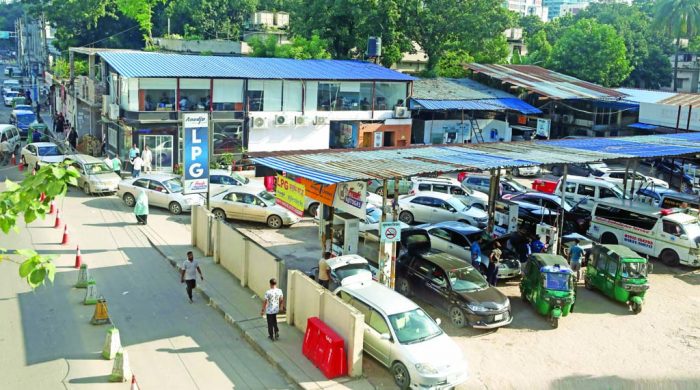
Five days after a technical glitch crippled one of Bangladesh’s two floating LNG terminals, Petrobangla still has no timeline for restoring gas supply, forcing industries to rely on costly alternative fuels, households to switch to electric stoves, and CNG-run vehicles to endure long queues for fuel.
The prolonged disruption has dealt a major blow to manufacturers already struggling with a years-long energy crisis that has forced many factories to shut down, with many more now at risk of following suit.
Industry leaders say the survivors are now staring down a fresh round of soaring costs, with many questioning how much longer they can hold on.
Petrobangla spokesperson Tariqul Islam Khan told New Age that Excelerate Energy, the US-based operator running the floating terminal, has yet to provide any timeline for repair.
‘Local and foreign experts are working on the problem. We will be in a better position to say something after another 24 hours,’ he said — a remark that has offered little comfort to an industry already five days into the shutdown.
Bangladesh Textile Mills Association president Showkat Aziz Russell said the crisis has pushed factories to the brink.
‘This is not a new problem, but it has now reached an intolerable level. Most factories have shut down. We are paying workers’ wages and electricity bills without any production,’ he said, adding that mills needing at
least 10 PSI of gas pressure to run are now getting less than 1 PSI.
To keep machines running at all, factories have turned to a patchwork of costlier alternatives.
Textile and apparel units in Gazipur, Ashulia, Savar, Narayanganj and Narsingdi are increasingly relying on LPG, diesel and grid electricity in place of natural gas – options that industry figures say have driven production costs up by roughly 40 per cent.
One Narayanganj-based apparel exporter said their factory now sources 7,000 to 10,000 cubic metres of LPG daily, with LPG alone covering 35 to 45 per cent of their power needs after previously depending on Rural Electrification Board electricity as backup.
The latest disruption, traced to a ship-to-ship LNG transfer mishap on July 21, has slashed grid supply by around 450 million cubic feet per day, leaving the country able to meet only 57 per cent of total gas demand.
BTMA’s Russell Russell said switching to alternative fuels such as diesel or LPG was not a practical short-term solution.
Describing the severity of the crisis, the BTMA president said many mill owners had been left with little option but to ‘stay in mosques and pray for a solution.’
Bangladesh Knitwear Manufacturers and Exporters Association president Mohammad Hatem told New Age that production disruptions were forcing exporters to resort to costly air shipments or offer substantial discounts to overseas buyers to meet contractual obligations.
It is a situation of loss upon loss. Without gas, production comes to a halt. If the crisis continues, compensation claims from buyers will push many factories towards bankruptcy, he added.
Industry insiders warned that a prolonged disruption in industrial production would significantly reduce VAT and tax collection, posing a serious challenge to the government’s revenue targets.
The shortage has also hit power generation, household and CNG-run vehicles hard.
A platform named 24-Hour CNG Supply Implementation Committee will submit a memorandum to the Petrobangla chairman today (Sunday), demanding uninterrupted gas supply and action against alleged irregularities, including gas diversion through cascade cylinders and meter tampering.
As one of the country’s two Floating Storage and Regasification Units has effectively remained out of operation, the national gas supply has fallen to 2,170 mmcfd from 2,620 mmcfd against a demand of 3,800 mmcfd, according to Petrobangla estimates.
Apparel business giant Anwar Group of Industries vice-chairman Hossain Mehmood told the media that although factories were continuing production using LPG, electricity and oil amid the gas crisis, production costs had risen by about 40 per cent compared with natural gas.
Hasan Mehedi, member secretary of the Bangladesh Working Group on Ecology and Development, said if industries switch from gas to diesel or LPG, production costs will rise sharply, which will inevitably increase the prices of finished products and undermine our global competitiveness.
‘Generating electricity with diesel could cost around Tk 45 per unit, compared with roughly Tk 8-9 per unit using natural gas considering industrial gas tariffs,’ Mehedi said.
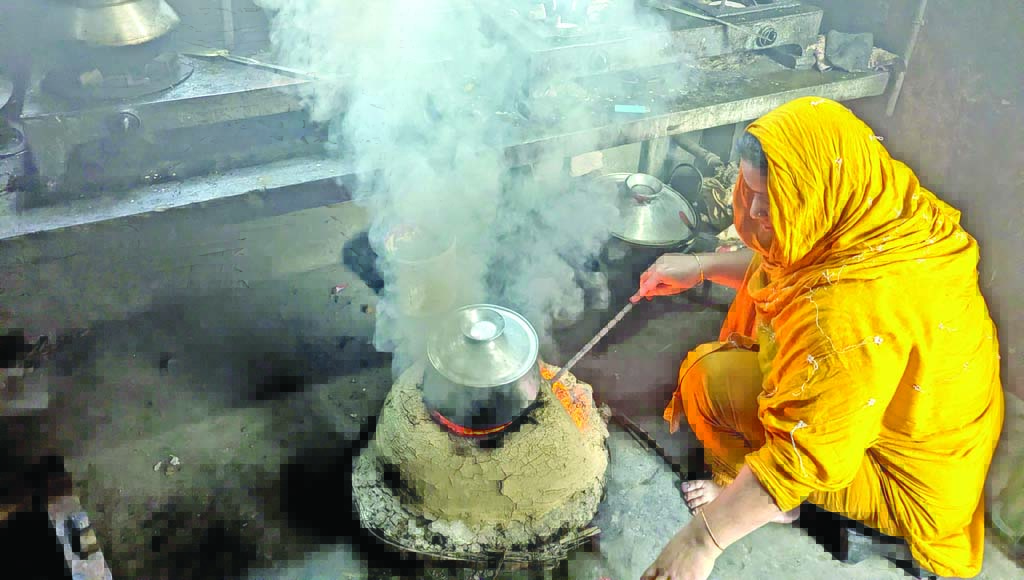
Like industries, households are also suffering without cooking gas. With gas supply cut off entirely in many areas, families have been forced to skip regular full meals, spend extra on eating out, or turn to electric appliances for cooking — a shift that has driven up their monthly electricity bills even as they go without the gas connection they pay for.
The crisis has also squeezed the country’s transport sector, with declining gas supply leaving many CNG-run vehicles idle at parking lots as owners struggle to fill up.
Private sector employee Mustafizur Rahman said he could not get an Uber ride on Saturday despite waiting for a long time.
‘A driver told me that he had waited for about two hours at a CNG filling station but managed to buy only Tk 45 worth of gas,’ he said.
Abdus Shakur Chowdhury, proprietor of Pinnacle Power Limited at Kuril, said his filling station had not received any gas supply from Titas Gas over the past four days.
‘As a result, the CNG filling station has remained closed,’ he said.