Roots of Srebrenica’s genocide

- Update Time : Monday, July 20, 2026
- 17 Time
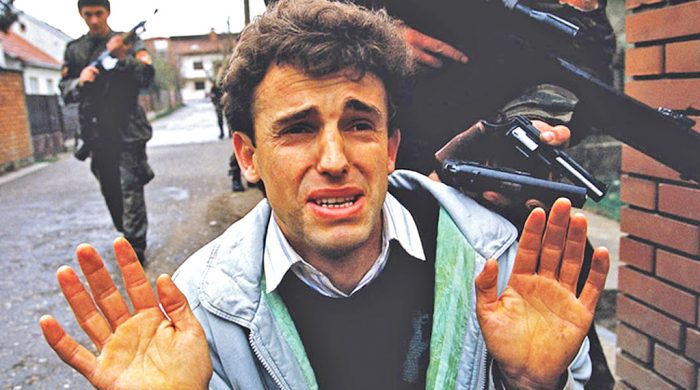
THE Srebrenica genocide was the result of long-standing tensions and a deliberate political agenda. Under Tito’s Yugoslavia (1945–1980), Orthodox Serbs, Catholic Croats and Muslim Bosniaks co-existed. After Yugoslavia’s collapse, hardline nationalists, led by the Serb Democratic Party, or the SDS, rose to power, promoting the creation of a Serbian state in Bosnia. After Bosnia’s overwhelming vote for independence in early 1992, Serb forces, backed by Slobodan Miloševic, launched a war to partition the country and remove Muslims from territories they claimed.
This wave of ethno-nationalism was furled by historical prejudices and propaganda that dehumanised Muslims. While Bosniaks and Croats fought to maintain unity, Bosniak leadership often complied with international demands, underestimating the danger of Serb forces, which were committed to territorial conquest at any cost. This left the Bosnian Muslims particularly vulnerable.
From spring 1992 onward, a pattern of ethnic cleansing unfolded across Bosnia. Serb forces encircled mixed towns, expelled or isolated Muslim populations and moved in. In areas like Višegrad, Foca and Vlasenica, mass atrocities occurred, with women and girls being subjected to systematic rape and beatings and many men detained, tortured, or executed. These events exemplified the widespread ‘cleansing’ of neighbourhoods. Mass graves were discovered behind schools and factories, revealing the extent of community destruction.
The war was characterised by neighbours turning against each other. In 1992 alone, tens of thousands of Muslims were expelled from eastern Bosnia and by late 1993, most of this region, along with parts of central Bosnia, had been purged of Bosniak and Croat populations.
The expulsions began with terror from snipers and shelling targeting civilians, leading to the establishment of detention camps where torture and murder occurred. Survivors described these places as ‘hellish’ sites of persecution.
A chilling aspect of the cleansing campaign was the routine use of organised rape and sexual slavery against Bosniak women and girls. This was not incidental or random. It was an entrenched military strategy. Private houses, hotels and former schools became sites where women were imprisoned, tortured and repeatedly raped, often gang-raped, as a means to terrorise and humiliate entire communities. For example, after Foca had fallen, women as young as 12 were held in a house, later dubbed Karaman’s house, and systematically brutalised. Similar centres sprang up in Serb-held Prijedor, Brcko and elsewhere.
Estimates suggest that between 10,000 and 50,000 Bosniak women were raped during the war, with some victims enduring multiple assaults in public to send out a message of helplessness. This widespread sexual violence was seen as a tactic of ethnic cleansing, aimed at breaking social bonds and instilling despair. Rape camps and forced pregnancies aimed to alter demographics, with some commanders releasing women only if they became pregnant.
By 1995, much of Bosnia’s Muslim population was displaced, with remaining enclaves like Srebrenica declared ‘safe areas’ by the United Nations. However, these designations provided little actual protection. Srebrenica, surrounded and besieged by Serb forces from 1992 to 1995, faced daily shelling and a dire shortage of food and medicine. On July 2, 1995, Serb forces, under orders from leaders like Radovan Karadžic and General Ratko Mladic, launched a full assault, overwhelming the outnumbered Dutch peacekeepers within days.
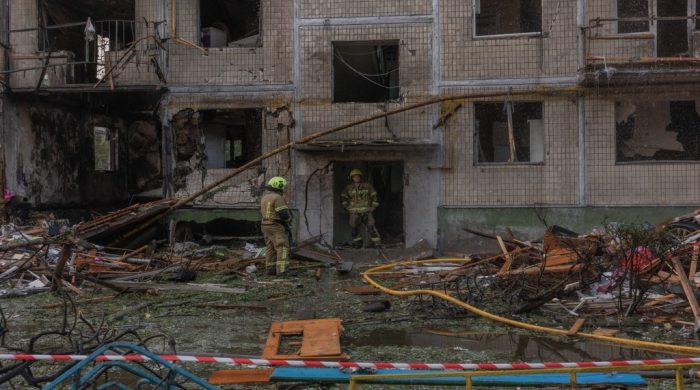
What happened next was a premeditated mass murder. Bosnian Serb soldiers separated men and boys from women and children at truck convoys and roadblocks. Nearly the entire male population of the town, estimated at over 7,000, was lined up and executed in dozens of execution sites beyond the town. Bodies were buried in hastily dug pits. The women, children and elderly were expelled towards the Muslim-held territory. In short, Srebrenica was cleared of Bosniaks. The tribunal in the Hague eventually found that this was no random crime but an organised plan.
The scale of the massacre haunts Bosnia. It was Europe’s largest single atrocity since 1945. Virtually, every family in the enclave lost a father, brother, or son. Although the Dutch peacekeepers managed to avoid bloodshed, they are remembered for failing to stop the killing.
An especially bitter element of the genocide was how everyday people became killers. In countless villages, ethnic Serb neighbours used the war as a licence to seize property and settle old scores. In many places, local police or newly formed militias organised the round-up of Muslims, sometimes with only a week’s notice to pack a few belongings before being loaded onto buses for ‘evacuation.’ It later emerged that these so-called evacuations almost always ended in executions or concentration camps.
Atrocities occurred in daylight, entire streets were driven into fields and shot and women were raped in their houses. This near-universal betrayal undermined communal trust. As a US ambassador noted at the time, many Bosniaks felt ‘dead tired’ of the hypocrisy of UN and world leaders who made empty promises of protection. One Bosnian diplomat described his people as ‘running on this treadmill of cynicism… helplessness.’
While the Serbs waged their campaign, western powers largely stood aside. The United Nations imposed an arms embargo on the entire region back in 1991, which, in practice, hurt the poorly armed Bosnian government the most. Under this ban, Bosnia could not legally import weapons to defend itself even as Yugoslav arsenals funnelled tanks and artillery to Serb forces. Appeals to lift the embargo repeatedly failed. In June 1993, the Security Council refused even to vote on an American-sponsored plan to arm Bosnia as Britain, France and Russia abstained. At the United Nations, Bosnian Muslims saw the world’s governments turn a deaf ear. Ambassador Muhammad Šacirbey railed that his people were left to their fate by a ‘treadmill of cynicism.’
By 1995, the US Congress attempted to lift the embargo on Bosnia, but president Clinton vetoed the bill, citing ‘widespread atrocities’ by the Bosnian Serbs and warning of a potential ‘wider war in the heart of Europe.’ The west was apprehensive about a Muslim-majority region having access to weapons. Also, having a Muslim majority region in the Europe was also seemingly an unacceptable concept.
The UN’s ‘safe areas’ concept proved to be an illusion. UNPROFOR troops were deployed in early 1992 with a non-combative mandate, often outnumbered and unable to defend the enclaves effectively. In Srebrenica, for example, a few hundred Dutch peacekeepers faced thousands of VRS soldiers and could not prevent the enclave’s fall. NATO intervened only after the massacre in July 1995 and had began airstrikes that forced negotiations, but by then, the men of Srebrenica were already dead.
During the conflict, western leaders called for neutrality but failed to provide necessary support. After the war, the ICTY and the ICJ confirmed that the mass killings in Srebrenica constituted genocide and that the Serbian state violated the genocide convention by not preventing the atrocity or punishing those responsible.
Other perpetrators included local commanders and militias. Dragoljub Kunarac, a Bosnian Serb reserve officer, was convicted by the ICTY for running rape camps; dozens of mid-level officers and policemen were sentenced for murder, torture and deportation. Even in its fractured post-war justice system, Bosnia has tried some local Serb officials. But many lower-level perpetrators lived freely and some trials were short. The memory of these events, however, has been fiercely contested. To this day, nationalist factions in Serbia and within Republika Srpska deny the label ‘genocide’ and play down their side’s role. Polls show that a majority of Bosnian Serbs reject the Srebrenica genocide verdict outright. This climate of denial feeds new threats: in recent years, RS leaders have refused to accept federal law criminalising the denial of genocide, flouted the constitutional court’s authority and even moved to secede from Bosnia’s joint institutions.
Srebrenica was not isolated. It was, rather, the predictable outcome of murderous ideology and international indifference. It showed what happens when neighbouring communities are pitted against each other by extreme nationalism and when global powers shrink from action. We must confront this history with clear eyes and moral clarity. Denial and revisionism, still propagated by some leaders, must be challenged. Bosnia’s fragile peace depends on truth and accountability. The world cannot consign the slaughter of 8,000 human beings to oblivion or relativise it for political convenience.
It is imperative that new generations in Europe and beyond should learn the facts of what happened. We owe it to the survivors and to those silent graves to honour their memory by insisting on justice.
To be continued.
Simon Mohsin is a political and international affairs analyst.