When Generals Have Become Presidents

- Update Time : Tuesday, June 30, 2026
- 1 Time
One quite does not know why Pakistan’s Field Marshal Asim Munir has to be beside his country’s ruling politicians on almost every occasion. He was there in Washington when Prime Minister Shehbaz Sharif visited the White House to confer with President Donald Trump. In Islamabad’s mediation efforts in the US-Iran conflict, he was a ubiquitous presence everywhere.
It is something one has not quite noticed anywhere else, not even in Pakistan, where the military has had a chokehold on politics since October 1958. Asim Munir, who has been instrumental in keeping deposed Prime Minister Imran Khan behind bars for over a thousand days, obviously because as head of government Khan had removed him from his position as chief of the country’s Inter-Services Intelligence (ISI), has not demonstrated any ambition to take over as President. Till now, at least. But he clearly overshadows President Asif Ali Zardari and Prime Minister Sharif, which is a hint that he could sooner or later seize power as head of state or government or both.
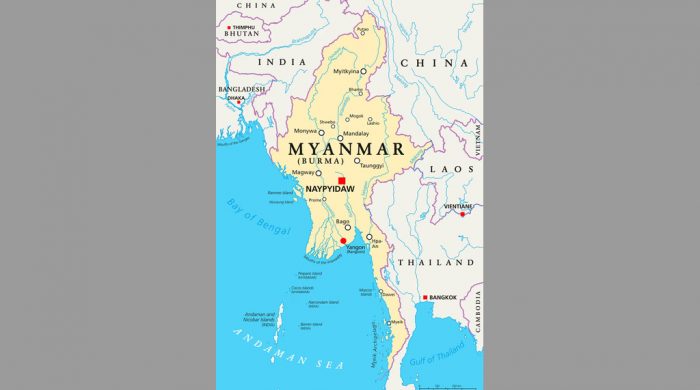
The history of generals commandeering the state in our part of the world has long been a sordid tale of democracy constantly being on the backslide owing to the emergence of ambitious soldiers in the political arena. A few weeks ago, General Min Aung Hlaing, having catapulted himself to the Myanmar presidency, was warmly received in Delhi by the Indian leadership. One recalls the coup he launched some years ago against Aung San Suu Kyi, who has been a prisoner for years now. That reminds us of the brazenness with which General U Ne Win overthrew the civilian government of Prime Minister U Nu in Burma, as the country was then known, in 1962 and put Burmese citizens in an authoritarian straitjacket for decades altogether.
Generals who have promoted themselves to the office of President in South Asia and elsewhere are interesting studies in the perennial human quest for power. Take Pakistan again, where only twenty days after Major General Iskandar Mirza and army chief General Mohammad Ayub Khan imposed martial law on the country, the latter elbowed the former out of his way and assumed full powers as President. In 1960, Ayub promoted himself to field marshal and remained in control of Pakistan for more than a decade. His departure was followed by a new phase of martial law decreed by General Agha Mohammad Yahya Khan, the army commander-in-chief, in March 1969. As President, Yahya presided over the country’s first general election in 1970, following it up with a genocide of Bengalis in Pakistan’s eastern province which in turn was followed by the break-up of the country and his humiliating resignation.
It is of course part of history that generals have often waited for the right moment to strike in their goal of seizing power from civilian governments. Chile’s Augusto Pinochet is a case in point. His coup d’etat, supported by US President Richard Nixon and Secretary of State Henry Kissinger, was the beginning of a bloodbath that left President Salvador Allende and thousands of other Chileans dead in the weeks and months and years after 11 September 1973. The ambitious General Suharto in Indonesia presided over the extermination of communists through his soldiers before eventually pushing out an already weakened President Ahmed Sukarno in 1967 and taking over the presidency of the country. Anywhere between a million and two million Indonesians perished in the period between 1965 and 1967.
In Pakistan – and there we go again – General Ziaul Haq felt no qualms of conscience when in July 1977 he deposed Prime Minister Zulfikar Ali Bhutto, the very man who had him promoted to army chief over six other generals when General Tikka Khan retired in 1976. Zia made himself President, as did General Pervez Musharraf in October 1999. For some time, Zia kept civilian President Fazle Elahi Chaudhry in office before showing him the door. Musharraf styled himself initially as the country’s chief executive before forcing President Rafiq Tarar out of office.
Any history of power and its seizure by generals will of necessity focus on Bangladesh. Justice Abu Sadat Mohammad Sayem was installed in office, once Khondokar Moshtaq was removed from power by General Khaled Mosharraf, on 6 November 1975. The next morning, a counter-coup brought General Ziaur Rahman to power. Mosharraf was murdered by renegade soldiers along with two fellow army officers. But Zia was careful, even as he became the most powerful man in the country, to keep Sayem on as President. It was not until April 1977 that Zia seized the presidency from Sayem and installed himself as Bangladesh’s new President.
Zia’s example was emulated by General Hussein Muhammad Ershad when, in March 1982, he dislodged the elected President Abdus Sattar and seized power. Ershad installed Justice Ahsanuddin Chowdhury as President and operated as chief martial law administrator. However, a time soon came when General Ershad, much like his fellow army officers in Pakistan and Bangladesh, created the perfect conditions for President Ahsanuddin Chowdhury to quit office, a move followed by Ershad’s taking over as Bangladesh’s new President.
Away from South Asia, there are instances galore of generals turning their backs on loyalty to their leaders and seizing presidential authority without any regard to the law or the constitution. General Abdel Fattah el-Sisi, chief of the Egyptian army as well as minister of defence, felt little embarrassment in organising a coup against Mohammad Morsi, the genuinely elected President of the country. Morsi was then subjected to myriad forms of humiliation, produced in court in a cage in which he finally died. Turkey’s generals overthrew the government of Prime Minister Adnan Menderes in 1960 and eventually had him executed. The country was to muddle through a series of coups, with civilian regimes thrown in and then out for good measure. Not until Recep Tayyep Erdogan assumed power through electoral means was the power of the military curbed significantly.
And that is all for now. Don’t forget, though, that political power has always been a temptation for the ambitious and especially for the inordinately ambitious.
____________________________________________________
Syed Badrul Ahsan writes on politics, diplomacy, history and culture