11% of population at risk of arsenic contamination: Mirza Fakhrul

- Update Time : Tuesday, June 30, 2026
- 1 Time
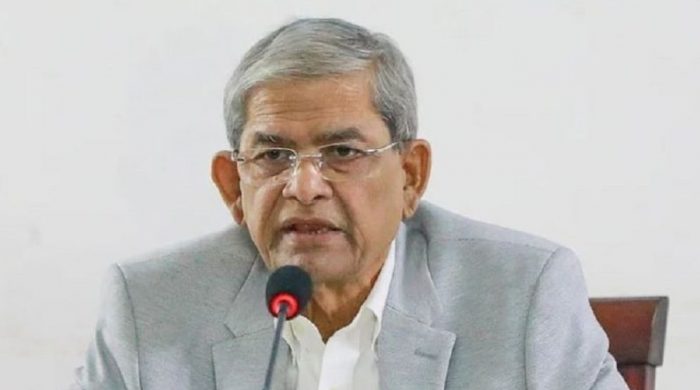
Around 11 per cent of Bangladesh’s population remains at risk of arsenic contamination, according to the Bangladesh Bureau of Statistics (BBS) and UNICEF Multiple Indicator Cluster Survey (MICS) 2019, Local Government, Rural Development (LGRD) and Cooperatives Minister Mirza Fakhrul Islam Alamgir informed Parliament on Tuesday.
Responding to a starred question from treasury bench lawmaker Selina Sultana (reserved women’s seat), the minister said the Department of Public Health Engineering (DPHE) has undertaken a series of nationwide initiatives to expand access to arsenic-safe drinking water and reduce public exposure to contaminated water sources.
As part of these efforts, 1,215,948 arsenic-safe water sources have been installed nationwide as of 2026. The facilities include deep tube wells, piped water supply systems, rainwater harvesting units, pond excavation and re-excavation projects, and solar-powered pond sand filters.
The minister expressed optimism that the ongoing programmes would reduce the proportion of people exposed to arsenic contamination to 5-6 per cent by the end of 2026.
Highlighting the progress of the initiatives, he said 615,497 safe water sources have already been installed under the projects currently being implemented.
He added that 199,485 water sources have been established under the Safe Water Supply through Rainwater Harvesting Project in Bangladesh’s coastal districts.
Under the completed Arsenic Risk Reduction in Water Supply Project, 174,676 safe water sources were installed, while another 88,235 water sources were established through the completed Rural Water Supply Project, he said.
The minister further informed Parliament that the completed Priority Rural Water Supply Project installed an additional 138,055 safe water sources to improve access to clean drinking water in rural communities.
The government, he said, remains committed to expanding safe water coverage and further reducing the health risks associated with arsenic contamination across Bangladesh.