Notice ::
From Zia’s Vision to Tarique’s Mission: A New Gateway of Possibilities for Bangladesh through China Visit

Reporter Name
- Update Time : Tuesday, June 23, 2026
- 22 Time

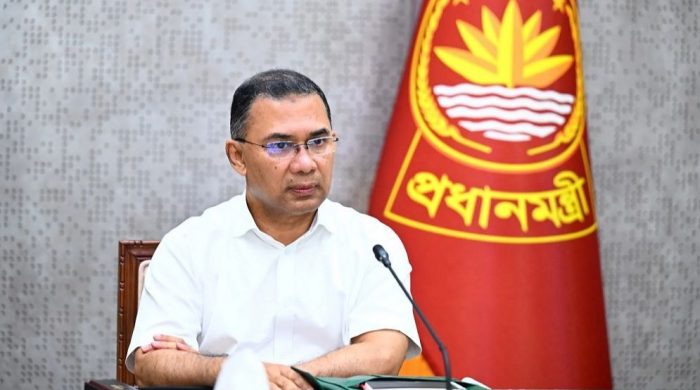
In the history of Bangladesh’s foreign policy, some visits are not merely formal state programs; rather, they reflect a nation’s future strategic position. Prime Minister Tarique Rahman’s visit to China is such an important chapter. It would be a mistake to view this visit only as a bilateral visit. Rather, it is an opportunity to open a new horizon regarding the future of Bangladesh’s economy, investment, technology, water security, education, and regional diplomacy.
The significance of this visit becomes even deeper when we look back at history. In 1977, President Ziaur Rahman visited China, which was a landmark event in the history of Bangladesh-China relations. After independence, relations between the two countries were still at a developing stage. Through Zia’s visit, a new foundation was established between Bangladesh and China for technological cooperation, economic partnership, and trade expansion. During the visit, the two countries signed important agreements related to technological cooperation and trade. The trend of military cooperation, infrastructure development, trade expansion, and increased strategic connectivity that developed later had its beginning through that historic visit.
Ziaur Rahman realised that to ensure Bangladesh’s development, a balanced, independent, and multidimensional foreign policy was necessary. His diplomatic vision was to give the highest priority to national interests and to build mutually beneficial relations with different powers of the world. Nearly half a century later, Prime Minister Tarique Rahman’s visit to China can be seen as a continuation of that pragmatic foreign policy.
The most discussed issue of the current visit is the possibility of signing 15 to 17 bilateral agreements and Memorandums of Understanding (MoUs) between Bangladesh and China. The Foreign Secretary has stated that these agreements may be concluded in various sectors, including infrastructure development, investment, technology, energy, agriculture, trade, and human resource development. If these agreements are implemented, this will be considered one of the most important Bangladesh-China cooperation packages in recent times.
One of the central issues of this visit is the Teesta Master Plan. The Teesta River, which is closely connected with the agriculture, environment, and economy of northern Bangladesh, has long been at the centre of national development discussions. With China’s cooperation, there is the possibility of implementing projects related to river management, irrigation expansion, river dredging, flood control, and bank protection. The Teesta project is not merely an infrastructure project; it is a potential foundation for the economic revival of the northern region.
From the issue of the Teesta arises the question of water diplomacy. The Farakka issue is one of the most important matters of Bangladesh’s national interest. Bangladesh has long-standing concerns regarding the distribution of the Ganges’ waters. At the same time, China’s upstream position on many important Asian rivers, including the Brahmaputra, has made China an important partner on the question of future water security. Bangladesh-China cooperation in climate change, flood forecasting, river research, and transboundary water management is a strategic reality for the future.
From an economic perspective, the importance of this visit is even broader. At the investment conference to be held in Beijing, the Bangladesh Investment Development Authority (BIDA) will present Bangladesh’s potential to Chinese investors. As one of the world’s largest manufacturing economies, China is currently seeking new investment destinations. Bangladesh’s young population, strategic location, competitive labour market, and rapidly growing economy have created an attractive environment for Chinese investment.
The Chinese Economic and Industrial Zone (CEIZ), to be established in Anwara, Chattogram, is an important economic component of this visit. If this long-discussed project is implemented, it may become one of the principal centres of Chinese industrial investment in Bangladesh. Opportunities will be created for the employment of thousands of people, increased exports, and the development of technological skills.
Bangladesh is taking a new step in attracting investment. BIDA has undertaken an initiative to establish its first overseas office on mainland China. This office will serve as a direct communication centre for potential investors and will highlight the opportunities and advantages of investing in Bangladesh.
The sectors in which efforts are particularly being made to attract Chinese investment are extremely important for the economy of the future. Cooperation in electronics, semiconductors, electric vehicle (EV) batteries, renewable energy, medical equipment, and information technology can give a new dimension to Bangladesh’s industrialization. Investment in these sectors will not only establish new factories but will also increase technology transfer, skilled human resource development, and Bangladesh’s participation in global supply chains.
Another important aspect of Bangladesh-China relations is education and human resource development. Recently, the visit of Pro-BNP student leaders to China has given a new dimension to relations between the two countries. The opportunity to directly observe China’s modern technology, research infrastructure, innovation, and industrial development has inspired Bangladesh’s younger generation in a new way. Student exchange, scholarships, research cooperation, and joint academic programs will further deepen relations between the two countries in the future.
At the same time, cultural exchange can also play an important role in increasing mutual understanding between the peoples of the two countries. Through language education, tourism, arts and culture, media, and academic cooperation, people-to-people relations will become stronger. In the long term, the sustainability of any strategic relationship depends on these public connections.
Before the China visit, Prime Minister Tarique Rahman’s Malaysia visit highlighted Bangladesh’s economic diplomacy by focusing on expanding employment opportunities for Bangladeshi workers and increasing remittance inflows. He called for the rapid reopening of Malaysia’s labour market and greater recruitment of Bangladeshi workers. The visit also witnessed the signing of a Memorandum of Understanding (MoU) on cultural cooperation, strengthening collaboration in education, culture, tourism, and youth exchanges. Together, the Malaysia and China visits demonstrate Bangladesh’s balanced and multidimensional foreign policy, promoting labour mobility, cultural cooperation, investment, technology transfer, and long-term economic development.
This visit also carries a geopolitical message. Several Indian media outlets have commented that Prime Minister Tarique Rahman chose Malaysia and China, rather than India, for his first bilateral visits. However, there is no scope to view the matter as a position against any country. Rather, it is an expression of Bangladesh’s independent, sovereign, and balanced foreign policy. A confident state builds relations with different powers of the world while keeping its national interests at the forefront. The current visit is a modern reflection of the independent foreign policy whose foundation was established by Ziaur Rahman.
Today, the relationship between Bangladesh and China is no longer confined only to diplomatic courtesies. It has evolved into a multidimensional partnership involving investment, employment, technology, water security, education, culture, and regional cooperation. If the potential 15-17 agreements, the Teesta Master Plan, the investment conference, CEIZ, cooperation in semiconductors and renewable energy, and educational exchange programs are implemented, the people of Bangladesh will enjoy their benefits.
Nearly fifty years ago, Ziaur Rahman laid the foundation stone of this relationship, and today Prime Minister Tarique Rahman has the opportunity to make that relationship broader and stronger in accordance with the demands of a new era. The success of this visit will not only be a diplomatic achievement; rather, it may open the door to new possibilities for Bangladesh’s development, economic prosperity, and future generations.
_____________________________
The political activist and analyst
More News of This Category