Perils of human trafficking

- Update Time : Monday, October 26, 2026
- 13 Time
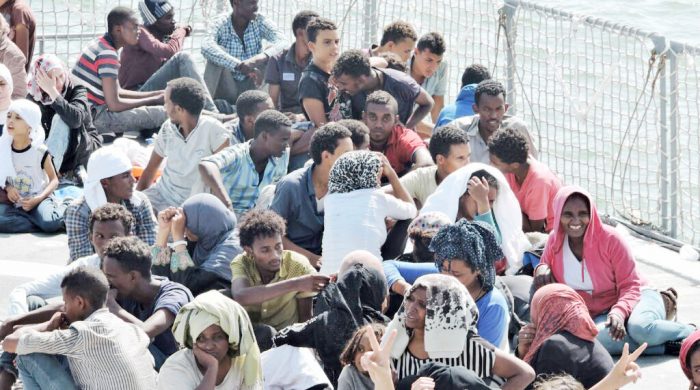
FOR many families in Bangladesh, Europe represents the possibility of a different life: a secure income, a house rebuilt, debts repaid and children educated. To send one family member abroad, land is sold, savings exhausted and a mother’s jewellery pledged. An individual journey becomes a household’s investment in the future. Yet the promised workplace may turn out to be a detention compound in Libya, the anticipated passage to prosperity may end beneath the Mediterranean.
To describe these tragedies simply as the consequences of reckless decisions is to overlook the organised economy of deception behind them. Trafficking networks turn the desire for a better life into a source of profit. They sell certainty where none exists and transfer almost every risk to the people who pay them.
Migrant smuggling involves facilitating irregular entry into another country for financial or material gain, but human trafficking involves recruiting, transporting, harbouring or receiving people through deception, coercion or other prohibited means of exploitation. Not every irregular migrant is a trafficking victim. But a journey undertaken voluntarily can become trafficking when passports are confiscated, ransom is demanded or people are forced to work to repay an imposed debt. Consent to travel is not consent to exploit.
Why the promise works
POVERTY matters, but it does not explain everything. Insecure employment, inadequate wages and the mismatch between education and opportunity make departure attractive. Migration also carries social meaning. A migrant’s new house, a family’s improved circumstances and the respect attached to overseas earnings can make leaving appear as the most credible route to advancement. Success is visible; failure is often concealed. Families celebrate those who prosper abroad, while returnees may remain silent about detention, abuse and unmanageable debt. The missing cannot describe what happened to them. This unequal circulation of experience gives recruiters’ promises an advantage over warnings.
Nor are all those drawn into these journeys destitute. Raising substantial travel costs often requires land, access to credit or relatives willing to contribute. Families with modest assets can therefore be especially exposed: they possess enough to finance departure but too little to absorb its failure. For a young person expected to support parents or siblings, migration may feel less like an adventure than an obligation.
The familiar face of recruitment
THE local broker’s greatest asset is often familiarity. He may be a neighbour, a relative, an acquaintance of a successful migrant or someone associated with a travel business. Familiarity lowers suspicion. A promise delivered by someone known to the family can seem more credible than an official warning. Not every intermediary is involved in trafficking. The danger arises when personal trust becomes an instrument of deception. A job is described as guaranteed, documents as settled and the sea crossing as brief. Payments accumulate in stages. Once the traveller is abroad, additional demands emerge, precisely when withdrawal has become most difficult.
The wider operation distributes responsibilities. Some recruit passengers; others arrange documents, transport or accommodation. Overseas associates control onward movement and, in some cases, confinement and extortion. Digital platforms extend the network’s reach. Arresting a village recruiter may interrupt recruitment temporarily, but dismantling the operation requires tracing payments, identifying organisers and investigating their overseas connections. Reports on Bangladesh have documented recruitment fraud, abusive intermediaries and debt-based coercion as significant concerns.
A geography of escalating danger
THERE is no single route to Europe. Routes change with border restrictions, conflict and the networks arranging passage. One important pattern takes Bangladeshis through intermediate countries to Libya, followed by attempted crossings from Libya or Tunisia towards Italy. International Organisation for Migration documentation identifies connections involving countries including the United Arab Emirates, Türkiye and Egypt. Other journeys proceed through Türkiye, Greece and the Balkans. A person may begin with a valid visa and subsequently enter an irregular and exploitative journey.
The sea is only one part of the danger. Before reaching the coast, migrants may face abduction, assault, forced labour and demands for ransom. At sea, overcrowded vessels, inexperienced crews and inadequate fuel or safety equipment leave little margin for failure. An engine breakdown can become a death sentence when drinking water runs out. Dehydration, exposure to the elements and exhaustion can be fatal; fuel fumes and suffocation below deck can kill even when a boat remains afloat.
Remembering the deaths accurately
THE accounts from 2005 demand particular care. An Agence France-Presse report published on 26 May described the experience of survivor Robiul Islam, whose attempt to reach Italy ended in catastrophe. After departure from the Moroccan coast, the engine failed. The report described nine days without food or drinking water, the deaths of 20 migrants and two Moroccan crew members and the rescue of 33 survivors by the Algerian navy. This was not an account of 22 Bangladeshis dying in an Italy-bound shipwreck.
Separately, The Daily Star reported on 11 March 2005 that 11 Bangladeshis had died from hunger and thirst aboard a boat travelling from Morocco towards Spain. They included two brothers from Dohar, Mosaddeq Hossain and Shamsuzzaman Himel. What had been presented as a journey of a few hours became a prolonged ordeal. These reports should neither be conflated nor their death tolls added together without evidence establishing their relationship. Accuracy is part of respecting those who died.
The suffering continued. Following a shipwreck off Tunisia on 10 May 2019, United News of Bangladesh quoted a Bangladesh embassy official as saying that, of 51 Bangladeshis believed to have been aboard, 14 had been rescued and 37 remained missing. They were feared dead; missing and confirmed dead must nevertheless remain distinct categories. In another incident in February 2024, reporting documented eight Bangladeshi deaths and survivors’ accounts of suffocation below deck. Behind every figure lies a family whose future has been abruptly halted.
What the numbers can and cannot tell us
THERE is no reliable comprehensive annual figure for Bangladeshis trafficked specifically through promises of reaching Europe. Identified trafficking victims, rescued migrants, irregular arrivals and people dead or missing at sea are different populations.
The US trafficking reports published in 2024 and 2025 recorded 1,210 and 1,462 government-identified victims respectively for their reporting periods. Their simple average is 1,336. That is an average of identified victims across trafficking categories, however, not an estimate of Europe-bound trafficking. Undetected exploitation remains outside those figures. Presenting a precise national annual total would imply knowledge the available evidence does not provide.
Responsibility beyond the shoreline
BANGLADESH’S response must reach the entire criminal chain. Investigations should connect local recruitment to financiers, document providers and overseas organisers. Financial records, digital communications and travel documents must become evidence. Influence or political connections should confer no protection and repayment settlements should not substitute for investigating exploitation.
Prevention also requires practical alternatives. Families need accessible ways to verify recruiters, visas and employment contracts, alongside confidential complaint mechanisms. Awareness campaigns must explain where reliable advice and assistance can be obtained. Decent employment at home and affordable, regulated migration pathways would make fraudulent promises less persuasive. Survivors need medical treatment, psychological support, legal assistance, witness protection and opportunities to rebuild livelihoods. Returning someone to debt, stigma and unemployment leaves the conditions for renewed exploitation intact.
Internationally, Bangladesh, transit countries and European destinations must strengthen joint investigations, judicial cooperation and efforts to recover criminal proceeds. Search and rescue, safe disembarkation and protection must remain central. Fewer arrivals cannot, by themselves, demonstrate success if people disappear elsewhere along the journey.
Wanting to reach Europe is not a crime. Turning that aspiration into a business of deception, captivity and exploitation is. A society that welcomes migrants’ remittances must also accept responsibility for their safety and dignity. Every death in the Mediterranean asks whether that responsibility extends beyond mourning and whether it will finally be translated into action.
Dr AKM Ahsan Ullah is professor of international relations, security and migration at Universiti Brunei Darussalam, Brunei.