UK court freezes £15m London flat owned by ex-Bangladesh land minister’s brother

- Update Time : Saturday, October 24, 2026
- 19 Time
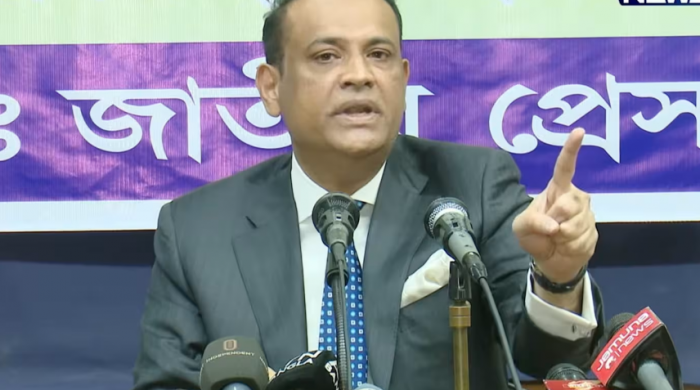
A £15mn London flat has been frozen by the High Court after anti-corruption investigators said it was linked to embezzlement, fraud and money laundering and that its Bangladeshi beneficial owner staged a £1 sale to disguise his control, reports Financial Times.
The UK National Crime Agency secured a sweeping court order this week to block the sale or transfer of the luxury property near Regent’s Park after Anisuzzaman ‘Ronny’ Chowdhury failed to explain the source of funds his company used to buy it.
In a witness statement, presented to the court by the NCA and seen by the FT, an investigator for the agency said it had uncovered a ‘deliberately opaque’ arrangement to conceal the residence’s true ownership.
At a hearing on Thursday the court was told that Chowdhury, whose brother Saifuzzaman Chowdhury served as Bangladesh’s land minister, was subjected to an unexplained wealth order last year requiring him to show the residence was purchased with legitimate funds.
Under UK anti-corruption laws, failure to do so creates a legal presumption that the property was acquired through unlawful conduct.
The NCA officer said in the witness statement that the agency ‘suspects that the property subject to this application derives from unlawful conduct, including embezzlement, corruption, fraud and money laundering’.
Faked signatures of former US president Richard Nixon, former UK prime minister David Cameron and US singer Chris Brown were used on documents and showed a ‘cavalier’ attitude to fraud, the officer said.
The investigator told the court that Anisuzzaman Chowdhury in September 2025 transferred a company that held the title of the property to a third party for an agreed nominal amount of £1, but a complex financial structure was designed to ultimately return control to his wife and two daughters.
Mrs Justice Karen Steyn ruled that there was a good arguable case that the property represented the proceeds of crime and granted the freezing order, though she also granted a carve-out to allow landlord possession proceedings to be brought.
Anisuzzaman Chowdhury’s solicitors told the court they did not oppose the freezing order.
He told the FT: ‘On legal advice I did not contest the NCA’s application for a [property freezing order] but I have not engaged in any unlawful conduct and if the NCA chooses to bring civil recovery proceedings, I will defend the proceedings strenuously and demonstrate that the allegations against me are untrue.’
Chowdhury denied disguising ownership of the property and said it had been ‘transparently disclosed’ to the NCA. He added that he would ‘thoroughly defend any defamatory statement against my wife and children who have nothing to do with this’.
The NCA officer said in the witness statement, dated July, that Chowdhury was in the UK and had used the apartment as his principal residence.
Saifuzzaman Chowdhury, the former land minister in Bangladesh, and his family members built a sprawling $295mn property portfolio between 1992 and August 2024, when the government of Sheikh Hasina collapsed.
After Hasina was deposed, the interim administration of economist Muhammad Yunus sought to track down foreign assets that it claimed were bought with money taken out of Bangladesh during her period of authoritarian rule.
The NCA in June 2025 froze properties linked to the former land minister worth about £185mn as part of ‘an ongoing civil investigation’. The NCA also secured an unexplained wealth order against Saifuzzaman Chowdhury, his wife and related companies that same month.
Saifuzzaman Chowdhury took hundreds of mortgages from British bridging-loan specialist Market Financial Solutions, which collapsed this year amid allegations of fraud.
Anisuzzaman Chowdhury previously told the FT that he has ‘no business relation’ with his brother.
Land Registry records show Anisuzzaman Chowdhury purchased the Regent’s Park apartment through his company Ronny 42 Limited in 2023 for £12.4mn.
The High Court heard that the company that owned the apartment was renamed PNN UK Properties after it was transferred to the third party for £1.
In a written submission to court, lawyers for the NCA described the sale as ‘nothing more than an arrangement of convenience’ to facilitate the refinancing of loans against the apartment from Singapore’s DBS Bank.
In contrast to the £1 paid for the shares in the company that owned the apartment, the total value of the share sale was £14.95mn, the NCA said.
The NCA added that the DBS loan had not been refinanced and that the Singaporean bank was pursuing the apartment’s repossession after a loan default.