Bangladesh govt to implement Teesta Barrage Master Plan at any cost: PM

- Update Time : Monday, June 29, 2026
- 0 Time
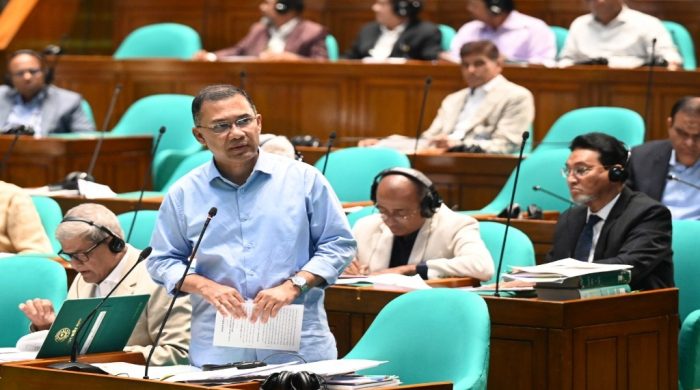
Prime minister Tarique Rahman on Monday pledged to implement the Teesta Barrage Master Plan at any cost, describing it as a national priority aimed at addressing the long-standing water crisis in northern Bangladesh.
Speaking during the discussion on the proposed budget for the financial year 2026-27 in the Jatiya Sangsad, chaired by speaker Hafiz Uddin Ahmad, the prime minister outlined the government’s long-term plans for the economy, agriculture, the creative economy, education and the energy sector.
He said that the government was fully aware of the concerns expressed by lawmakers from Rajshahi and Rangpur divisions, as well as the people of northern Bangladesh, over water shortages and the Teesta River, and was committed to finding a permanent solution.
Highlighting the government’s plans to secure water rights for the northern region, Tarique said that lawmakers representing Rajshahi and Rangpur divisions had consistently raised concerns over the Teesta and Padma rivers.
He said that previous BNP governments had always prioritised agriculture and made efforts to ensure farmers’ access to water whenever they were in office.
The prime minister announced that the government had also taken the initiative to construct the Padma Barrage to store excess monsoon water for year-round irrigation during the dry season.
He reaffirmed that the government would implement the Teesta Barrage Master Plan at any cost as a national priority.
The prime minister said that the government intended to bring emerging sectors including film, theatre, music, OTT platforms, digital content, gaming, fashion and software, into the economic mainstream under the banner of the creative economy.
He said that the sector had the potential to generate substantial employment and foreign exchange earnings.
Tarique also announced the introduction of a National Honorarium Framework for athletes who achieve success at home and abroad.
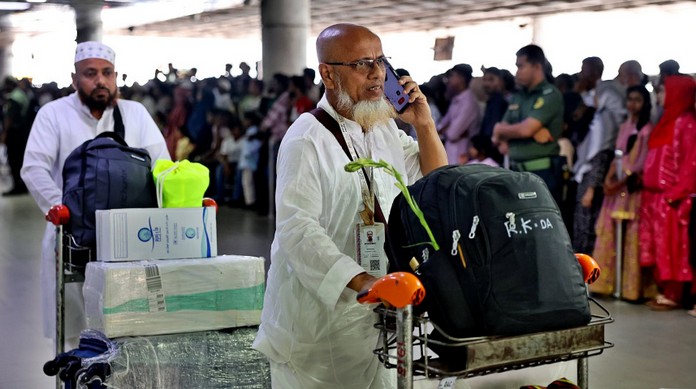
Recalling former president Ziaur Rahman’s role in opening overseas labour markets, particularly in the Middle East, the prime minister said that the government was exploring new destinations for skilled Bangladeshi workers.
He informed JS that work was under way to introduce an ‘Expatriate Card’ to provide immediate assistance and services to Bangladeshi migrant workers both abroad and upon their return home.
The prime minister criticised the deterioration of the energy and education sectors during the previous one-and-a-half decades, alleging that domestic energy exploration had been neglected in favour of foreign companies, resulting in widespread corruption.
He said that the government was restoring discipline in the energy sector by expanding domestic gas exploration and increasing investment in renewable energy to reduce dependence on imported fuel.
Tarique also stressed the need to rebuild the country’s education system, saying that educated, skilled and morally grounded citizens were the nation’s greatest asset.
He expressed confidence that the government would overcome the legacy of past failures and build a new, self-reliant and prosperous Bangladesh for the younger generation.