PM leads from the front in fight against waste, graft

- Update Time : Tuesday, June 9, 2026
- 27 Time

Initially, a Singapore-based intermediary, Springbuck Private Limited, purchased the broadcasting rights from FIFA and offered them to Bangladeshi television channels for Tk151 crore. Including taxes and VAT, the total cost would have approached Tk200 crore. Owing to the excessive price, no channel agreed to purchase the rights, creating uncertainty over whether the World Cup would be shown in Bangladesh. The government decided not to spend such a vast sum of public money. When Bangladesh declined to purchase the rights, Springbuck was compelled to return them to FIFA.
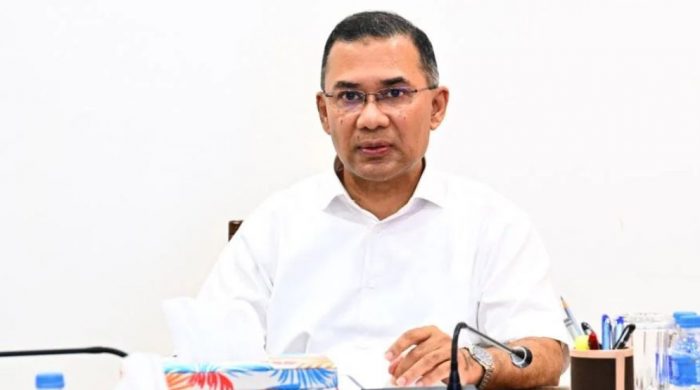
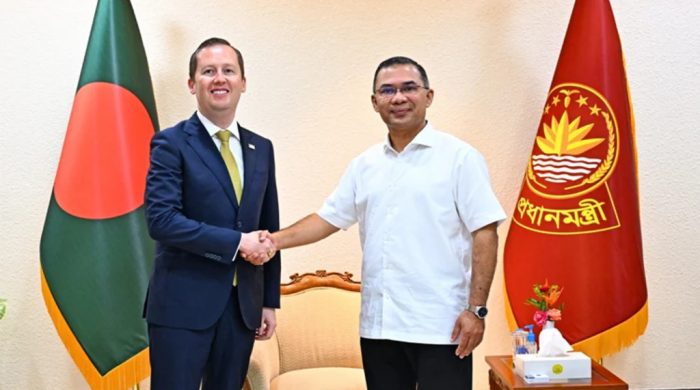
Subsequently, under the prime minister’s direction, the Bangladesh Football Federation (BFF) and the Ministry of Information contacted FIFA directly and secured the broadcasting rights at a significantly lower price. The total cost of broadcasting the World Cup will be Tk72.70 crore. Compared with the previous arrangement, the cost has fallen by Tk25 crore despite broadcasting expenses for this tournament being at their highest.
By contrast, the acquisition of the 2022 World Cup broadcasting rights was widely criticised. During the tenure of the Awami League government, Bangladesh Television (BTV) purchased the rights from Toma Construction & Company Limited at a cost of Tk98 crore, despite the company having no prior experience in the field. The Cabinet Committee on Economic Affairs, chaired by then Finance Minister AHM Mustafa Kamal, approved the purchase through the Direct Procurement Method (DPM), allowing the deal to proceed without competition. Toma Construction was among the firms that secured the highest number of government contracts during the Awami League era. Its chairman, Ataur Rahman, had sought an Awami League nomination for the 2018 parliamentary election in Noakhali-2 and later contested as an independent candidate. He also served as Vice-President of the Noakhali District Awami League.
Cutting excessive spending and reforming practices
The World Cup rights issue is not the only example of the prime minister’s efforts to reduce waste and corruption. Chittagong City Corporation Mayor Shahadat Hossain and four other officials sought approval to visit the United States to observe innovative mosquito-control measures. Prime Minister Tarique Rahman declined the proposal, arguing that there was no need to travel to Florida to learn about mosquito eradication. Instead, he remarked that effective solutions could be developed simply by observing local conditions around ditches and ponds across the country.
The prime minister also rejected a proposal to rename the Keraniganj Technical Training Centre after former prime minister Begum Khaleda Zia. He suggested that a new name could be considered when an entirely new institution is established. Furthermore, the Prime Minister’s Office has reduced expenditure by setting a combined budget of Tk150 per person for lunch and afternoon refreshments, a figure more than five times lower than previous spending levels.
Another significant decision has been the reform of the Tk1 crore discretionary allocation traditionally provided to Members of Parliament. Under the new system, MPs will no longer receive the funds directly. Instead, they will submit lists of development projects required in their constituencies to the Prime Minister’s Office. After auditing the proposals, the prime minister will instruct the relevant ministries to implement approved projects. This approach is expected to reduce corruption and waste while promoting more equitable and planned development nationwide.
Allegations of mismanagement under previous governments
For many years, corruption and waste have occurred under the guise of development. Some economists argue that project costs were deliberately inflated several times over to facilitate corruption. Public money was squandered on a large scale.
According to critics, this trend did not end during the tenure of the Yunus government. Rather, they claim it intensified. Large sums were allegedly spent on foreign travel, while allocations within the Ministry of Local Government were reportedly misused.
Challenges facing the private sector and social media
While tackling corruption is essential to reducing pressure on the national economy, revitalising the private sector is equally important if economic momentum is to be restored. Critics contend that during the Yunus administration, the private sector suffered severe setbacks. They argue that business confidence deteriorated significantly, leaving many entrepreneurs demoralised, frustrated and reluctant to invest.
Some commentators compare the situation to the period following the 1/11 political changeover in 2007, when the Fakhruddin-Moeenuddin administration was accused of creating uncertainty within the business community. According to these critics, the Yunus government pursued a similar course by filing murder cases against business leaders, freezing bank accounts and imposing travel restrictions. They claim that factory unrest, attacks on industrial establishments and incidents of arson further damaged investor confidence and disrupted economic activity.
Critics also point to what they describe as media trials and allegations of money laundering directed at prominent institutions and individuals. They question the basis on which eleven organisations and individuals were publicly labelled as money launderers and subjected to extensive scrutiny without, they claim, sufficient evidence. According to them, these actions created widespread concern among the country’s leading entrepreneurs and investors.
Over the past eighteen months, social media has also emerged as a major source of controversy. Critics argue that online platforms have increasingly been used to target politicians and business figures through sustained campaigns. They claim that Facebook and YouTube have become tools for character assassination, extortion and blackmail. In their view, the unchecked spread of misinformation poses risks not only to businesses but also to the functioning of government itself. They therefore argue that stronger regulatory measures are needed.
The way forward
The country’s economic situation remains challenging. The new government is scheduled to present its first budget next Thursday. To safeguard both the economy and democracy, economic recovery must remain a top priority.
Reviving the private sector is central to that effort. Critics argue that immediate steps should be taken to reverse policies and practices that created uncertainty for businesses during the previous administration. Entrepreneurs, they say, must be reassured through the creation of a stable, secure and investment-friendly environment. Sustained investment is difficult in an atmosphere of fear and uncertainty, and without investment, job creation and economic growth will remain limited.
Within only three months, Prime Minister Tarique Rahman has sought to demonstrate his determination to move the country forward. Just as he has intervened directly to curb corruption and reduce waste, many believe similar intervention is needed to restore confidence in the private sector. Supporters hope that, alongside efforts to heal broader national divisions, the prime minister will take decisive measures to revitalise a sector that they believe has been severely weakened in recent years.