Experts call for overcoming low-equilibrium tax trap

- Update Time : Sunday, May 17, 2026
- 22 Time
Experts on Saturday called for deep structural changes in Bangladesh’s tax system, warning that the country remains stuck in a ‘low-level equilibrium trap’ marked by a narrow tax base, weak governance and limited fiscal space.
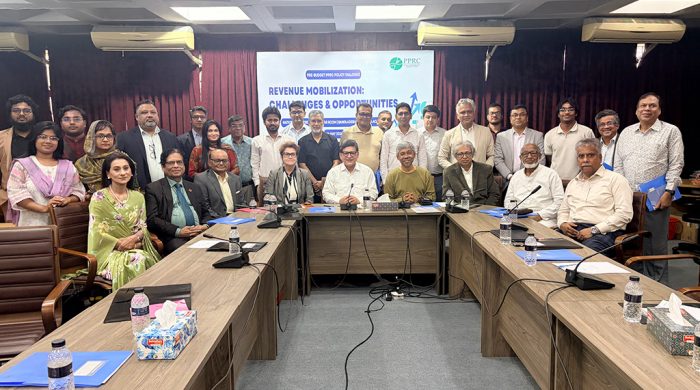
They were speaking at a seminar titled ‘Revenue Mobilisation: Challenges and Operation’ orgainsed by the Power and Participation Research Centre at Bangladesh Shilpakala Academy in the capital.
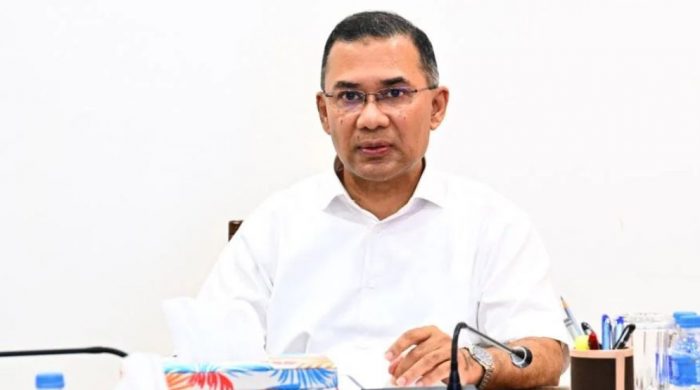
At the seminar, economist and prime minister’s adviser Rashed Al Mahmud Titumir said that Bangladesh’s low tax-to-GDP ratio and ‘low-level equilibrium trap’ were rooted in technical weaknesses and long-standing structural and governance challenges within the revenue system.
He said that sustainable tax reform required political commitment, accountability, and public trust, stressing that citizens would be more willing to pay taxes if they could clearly see that public money was being spent transparently for public welfare.
However, there was no scope for increasing tax rates further and that the focus should instead be on broadening the tax base, improving efficiency and strengthening transparency in revenue administration,’ he added.
Highlighting the long-standing practice of granting tax exemptions through SROs, Titumir said that the government was aware of concerns surrounding what he described as an ‘SRO-based culture’ that had created distortions and weakened confidence in the tax system.
He said that the government would take steps to improve transparency, accountability, and fairness in tax administration so that compliant taxpayers were not unfairly burdened.
He also stressed the importance of digitisation, cashless transactions, and risk-based audits to reduce harassment, VAT evasion, and revenue leakages.
He said that reducing direct interaction between taxpayers and officials through technology-driven systems would help improve compliance and trust.
Martin Gayle, operations manager of the World Bank Bangladesh Office, said that tax and revenue reforms are central to maintaining Bangladesh’s macroeconomic stability, as the country’s current growth model faces rising fiscal constraints and external shocks.
She also warned that Bangladesh is trapped in a ‘low revenue–low equilibrium,’ where a tax-to-GDP ratio below 7 per cent forces cuts in essential sectors like health and education, limiting development capacity.
Zaidi Sattar, chairman of the Policy Research Institute, argued that Bangladesh›s tax system remains primitive by 21st-century standards and requires radical reform, not higher tax rates.
He estimated that an additional 2–2.5 per cent of GDP in taxes is being collected but never reaching the treasury due to massive leakage.
Bangladesh›s tax-GDP ratio should reach 15–20 per cent by 2030, he said, while the current 70:30 indirect-to-direct tax ratio should shift to at least 50:50 by 2035.
On trade taxes, he pointed out that a 40 per cent exchange rate depreciation combined with a 15 per cent loading on import values had effectively raised tariffs by around 50 per cent — yet revenues have not risen, reflecting deep valuation fraud at customs.
He urged the NBR to fully activate ASYCUDA, the automated customs valuation system it has been paying for since 1994, but never properly implemented.
On VAT, he identified three priorities: moving toward a single rate, expanding the tax base — noting that exemptions worth 3.5 per cent of GDP exceed VAT collection of 2.8 per cent — and making the input credit mechanism effective for businesses.
Nasim Manzur, managing director of Apex Footwear, said Bangladesh’s private sector remains the main driver of economic growth and employment, accounting for around 72–76 per cent of total investment, but continues to face harassment, policy inconsistency and weak trust in the tax system.
He said these challenges have created what he described as a ‘tax terror’ environment, in which businesses operate in fear and uncertainty.
He also said that taxpayers are discouraged mainly by harassment concerns and a lack of transparency in how tax revenues are used.
‘Compliant taxpayers are often repeatedly targeted, while a significant number of evaders remain outside the system, creating an unequal burden,’ he added, calling for relief for genuine taxpayers and a shift in enforcement focus.
He urged authorities to bring in new taxpayers—particularly from under-taxed segments such as property owners, vehicle users and high-spending individuals—rather than overburdening the existing base.
On trade taxes, he warned that regulatory and supplementary duties are often protectionist and ultimately passed on to consumers.
He also pointed to disputes over customs valuation, weak input tax credit mechanisms, and burdensome advance tax practices.
He said that narrowing the tax rate gap between listed and non-listed companies is discouraging firms from entering the capital market.
He called for greater representation from the private sector and civil society within the NBR to strengthen trust and improve policymaking.
Speakers at the open discussion stressed that Bangladesh’s tax and VAT systems remain complex, narrow, and prone to harassment, discouraging voluntary tax compliance, calling for digitisation, use of artificial intelligence, risk-based audits, and cashless transactions to reduce leakage and corruption.
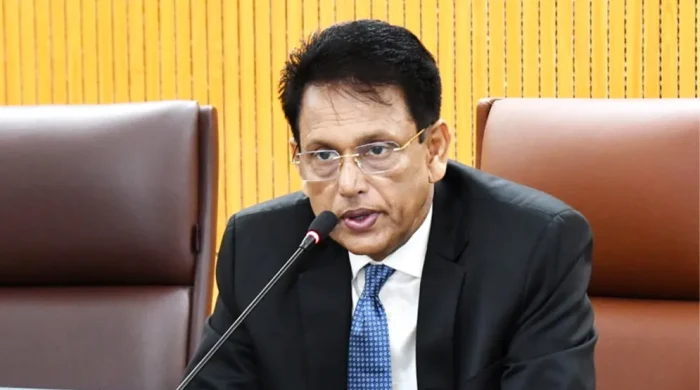
In the above discussion, NBR chairman Abdur Rahman Khan said the biggest challenges in the tax system are harassment, lack of transparency, and a limited tax base.
To address these, the NBR is gradually moving towards a ‘faceless’ and fully digital revenue administration.
He said online return filing has already been introduced, allowing taxpayers to submit information while automated systems handle calculations, reducing discretionary power and harassment. He noted that risk-based audits are being implemented and that around 4.5 million online tax returns have already been filed, creating a large data repository.
This will enable AI-based analysis of income patterns and improve policy and enforcement.
The tax-to-GDP ratio, he said, remains below 7 per cent, limiting fiscal space for health, education and social protection.
On VAT and compliance issues, he emphasised expanding the tax base through e-invoicing, reducing cash transactions, and tighter enforcement in sectors like tobacco, using QR and barcode-based digital stamps. He also announced plans to make refund systems fully automated and transparent.