Dhaka roads plunge into chaos as traffic system nears collapse

- Update Time : Thursday, May 14, 2026
- 19 Time
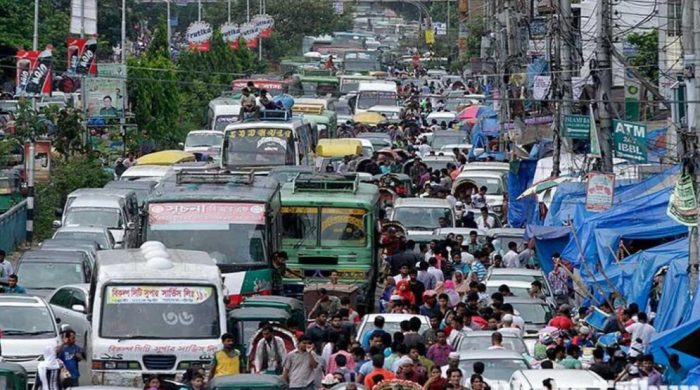
Dhaka’s roads have now turned into a lawless zone. Due to the laxity of traffic police and law enforcement agencies, the city’s overall traffic system has virtually collapsed. Unregulated battery-powered rickshaws, once confined to narrow alleys, are now operating aggressively on major roads in VIP areas such as Gulshan and Banani.
Easy bikes are also competing for road space alongside these battery-run rickshaws. Old, dilapidated buses continue to stop randomly to pick up passengers, while buses from rival companies race and overtake each other recklessly. Overspeeding private cars, indiscriminate parking, and excessive honking remain unchecked.
Transport experts said that there has been virtually no effort to regulate battery-powered rickshaws in Dhaka, which have now gone largely beyond control. Roads account for only around six percent of the city’s area, despite urban planning standards suggesting they should make up at least 25 percent. Under such conditions, giving unrestricted access to these small vehicles is highly inappropriate.
Many people see purchasing these illegal vehicles as an easy source of livelihood. No paperwork is required to buy them, allowing people with undeclared money to invest in the sector. Powerful interest groups are emerging around this business, while criminal networks are reportedly involved in extortion activities linked to it.
Battery-powered auto-rickshaws were once limited to Dhaka’s alleyways, but now there is hardly any major road where they are absent. Even major roads in upscale areas like Gulshan and Banani have become crowded with battery-powered rickshaws and easy bikes. Yesterday, hundreds of such vehicles were seen operating around the Gulshan-2 circle.
A new source of concern has emerged in the form of another three-wheeled battery-powered vehicle resembling a rickshaw. While its rear section resembles a traditional rickshaw, the front part is mechanized. More alarmingly, drivers are using these high-speed vehicles not only to transport passengers but also to carry heavy goods. They are increasingly being used like vans and pickup vehicles, raising fears of serious accidents at any time.
Another worrying issue is that these drivers have no licenses, no formal driving training, and the vehicles themselves are not registered. Despite all this, they continue operating freely while disregarding traffic laws. Although there are no exact statistics, estimates suggest Dhaka may now have around one million battery-powered rickshaws.
Local influential figures and business groups are allegedly operating syndicates to introduce these vehicles onto city roads, contributing to severe traffic disorder and congestion. Meanwhile, ride-sharing motorcycle drivers, coupled with excessive speeding by bikers, are creating additional challenges on the roads.
Source : Bangladesh Pratidin