Power cuts, heatwave hit life, business

- Update Time : Sunday, April 26, 2026
- 32 Time
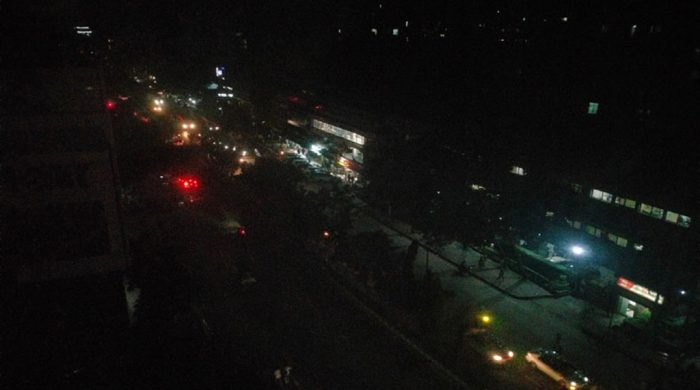
People across the country on Saturday continued to suffer because of frequent power outages caused by the production shortfall together with a mild heat wave sweeping over nearly one-fourth of the districts.
The Bangladesh Power Development Board supplied 12,333 megawatts of electricity against a demand for 14,670 megawatts at 4:00pm on the day, leaving a deficit of 2,337 megawatts nationwide, according to the Power Grid Bangladesh PLC.
Businesses said that the ongoing energy crisis was pushing up operational costs across the apparel sector, with business expenses rising by 10 to 30 per cent depending on the factory size.
Many rural areas experienced power outages eight to 10 times a day bringing daily life, particularly in those areas, to almost a standstill.
With temperatures soaring, outages lasting for hours at a time disrupted household, business and educational activities and left office-goers, students and candidates appearing for the Secondary School Certificate examinations affected most.
Consumers reported repeated interruptions in electricity supply even during early morning and late night amid sweltering heat.
Bangladesh Garment Manufacturers and Exporters Association president Mahmud Hasan Khan on Saturday said that production in the sector had declined by around 20 per cent.
For instance, Mahmud Hasan said, a factory that previously produced 10,000 pieces in a 10-hour workday is now able to produce only 8,000 in the same period due to energy-related disruptions.
To compensate for this 20 per cent production shortfall and avoid order cancellations or delays, factories are increasingly relying on overtime, he said.
While this allows them to meet shipment deadlines, the combination of reduced efficiency and higher labour costs is pushing up overall operating expenses, ultimately resulting in financial losses for businesses, said the BGMEA president.
Bagladesh Knitwear Manufacturers and Exporters Association president Mohammad Hatem said that exporters were unable to pass on the additional burden to buyers as prices are fixed in advance.
At a press conference on Saturday, the BKMEA leader said that exports had been declining in recent months, while factories were currently operating at only 50–60 per cent of their capacity.
‘Right now, the energy shortage is one of the biggest problems. The government says that there is no shortage or crisis of fuel, but the reality is that we are not getting it at filling stations,’ Hatem said.
He alleged that factories were facing two to three hours of load-shedding during working hours, while units in Gazipur and other areas under the Palli Bidyut network are experiencing up to seven hours of outages.
BGMEA vice-president Md Rezwan Selim said that the crisis in the Middle East had contributed to global disruptions, with a multifaceted impact on businesses.
Import costs for fabrics have also increased, while shipments are being delayed due to the ongoing energy constraints, he said.
A mild heat wave on the day was sweeping over 20 districts, including in Khulna division, and districts such as Dhaka, Madaripur, Rajshahi, Pabna, Patuakhali, Rangamati, Chandpur, Bandarban, Lakshmipur and Feni, said the Bangladesh Meteorological Department.
The Met office also forecast a slight fall in temperature from Sunday, with rain likely in parts of the country, including in Dhaka, Mymensingh, and Sylhet divisions.
The BMD also said that the rainfall would intensify across the country over the next five days, with forecasts indicating widespread thundershowers, gusty winds, and heavy to very heavy rainfall in several regions.
New Age staff correspondent in Rajshahi reported that an intense heat wave coupled with high humidity continued to disrupt life amid persistent dry weather and prolonged outages in Rajshahi region.
The BMD recorded the country’s highest temperature at 38.4 degrees Celsius in Rajshahi on Saturday.
The soaring temperatures have sharply increased electricity demand, triggering load-shedding for up to 14 hours in rural areas and up to seven hours in urban centres in the region.
Iqbal Hossain, a sub-assistant engineer at the Bogura 230/132 kV grid substation, said that the region was receiving around 1,200 megawatts of electricity against a demand for 1,600 megawatts.
Residents said that recurring power cuts were making daily life increasingly unbearable.
Md Manik, who runs a computer shop in Rajshahi city, said that his area had already experienced four hours of load-shedding by noon.
‘We hardly get electricity. Power returns only occasionally and even for a very short time,’ he said.
The continuing heat wave and erratic electricity supply have also intensified concerns among farmers over irrigation and crop damage, particularly for boro paddy, mango and litchi.
Tariqul Islam, a deep-tubewell operator in Godagari upazila, said that frequent power cuts had significantly reduced irrigation capacity.
‘We are facing up to 12 hours of outages daily. I could irrigate the fields for only six hours,’ he said, adding that cracks had already appeared in some paddy fields.
Our Kushtia correspondent reported that prolonged power outages were similarly disrupting daily life in Meherpur.
Residents in both urban and rural areas reported seven to eight hours of load-shedding daily, with the situation particularly severe in Gangni and Bamundi.
Farmers warned that the outages were affecting irrigation at a critical stage of the agricultural season.
Abdul Malek, a farmer, said that the lack of electricity had forced them to rely on costly diesel for irrigation.
‘This is a crucial time for farming. Without electricity, we cannot run water pumps,’ he said.
Another farmer, Shihab Uddin, said that rising costs of seeds, fertilizer, and irrigation were making farming increasingly difficult.
Households also reported hardship. Abeda Khatun, a housewife, said that heat and power cuts had made it difficult to sleep and carry out daily chores.
Local traders said that they were incurring losses as perishable goods got rotten due to irregular electricity. Hafizur Rahman, a grocer, said that sales had dropped significantly.
Officials at the local rural electrification office said that the outages were due to insufficient supply from the national grid amid high demand.
Power generation has meanwhile resumed at the Barapukuria Thermal Power Plant after a two-day shutdown, bringing relief to several northern districts affected by electricity shortages, according to a report by Bangladesh Sangbad Sangstha on the day. .
Officials confirmed that the first unit of the 525MW coal-based plant in Parbatipur upazila started on a trial basis late Friday night and supplied between 55 and 60 megawatts of power to the national grid.
On April 22, the unit was shut down because of the presence of stones in the coal.
Approximately 700 tonnes of coal are required to operate the unit at its current capacity while the coal is outsourced from the nearby Barapukuria coal mine.