20 key ords lose validity

- Update Time : Saturday, April 11, 2026
- 32 Time
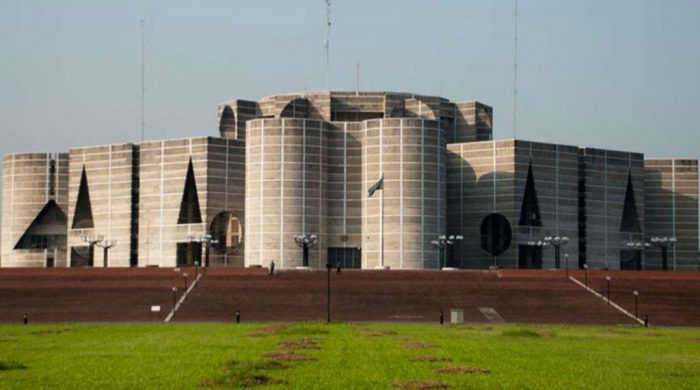
JS passes 91 bills, validating 113 ordinances with amendments
Twenty ordinances promulgated by the interim government, including key reform measures on judicial independence, human rights, referendum, enforced disappearance prevention and anti-corruption, are losing their validity from today as they failed to secure approval from Jatiya Sangsad within the constitutionally mandated timeframe.
Opposition lawmakers staged a walkout from Jatiya Sangsad, the Bangla word for the parliament, at 7:37pm, protesting at the passage of the July Mass Uprising Memorial Museum Bill 2026 with amendments and the failure to table 13 ordinances as bills.
As of Friday, the parliament passed a total of 91 bills, of which 87 were enacted to validate 113 ordinances, some with amendments, while four others were passed to repeal seven ordinances.
As a result, 13 ordinances lapsed automatically as the government did not place corresponding bills before the parliament within the required 30-day period from the first sitting.
The first session of the 13th Jatiya Sangsad began on March 12, and under constitutional provisions, the deadline to approve ordinances issued during the interim government expired on Friday.
After staging a walkout, opposition leader and Bangladesh Jamaat-e-Islami chief Shafiqur Rahman alleged that the government had breached a political consensus reached at a meeting of the special parliamentary committee formed to review the ordinances.
He said that the committee had agreed that the July Mass Uprising Memorial Museum Bill would be passed without changes, but it was instead adopted with amendments.
Shafiqur said that the parliamentary business advisory committee had also decided that all 133 ordinances would be placed before the parliament, but major ordinances, including those on the Anti-Corruption Commission, the Police Commission, the National Human Rights Commission and enforced disappearances, were not tabled and were set to lapse on Saturday.
In response, law minister Md Asaduzzaman said that the ordinances, including those related to the Anti-Corruption Commission and the Human Rights Commission, were undergoing further scrutiny to make them more robust and up to date, and would be brought later following consultations with the opposition.
The seven ordinances formally repealed by the parliament include the Supreme Court Judges Appointment Ordinance 2025, the Supreme Court Secretariat Ordinance 2025, the Supreme Court Secretariat (Amendment) Ordinance 2026, the Jatiya Sangsad Secretariat (Interim Special Provisions) Ordinance 2024, and three ordinances related to the National Human Rights Commission issued between 2024 and 2025.
The 13 ordinances that were going to be lapsed include the Referendum Ordinance 2025, the Prevention and Remedy of Enforced Disappearance Ordinance 2025 and its amendment, the Anti-Corruption Commission (Amendment) Ordinance 2025, the Revenue Policy and Revenue Management Ordinance 2025 and its amendment, the Value Added Tax and Supplementary Duty (Second Amendment) Ordinance 2025, the Customs (Amendment) Ordinance 2025, the Income Tax (Amendment) Ordinance 2025, the Civil Aviation (Amendment) Ordinance 2026, the Bangladesh Travel Agency (Registration and Control) (Amendment) Ordinance 2026, the Microfinance Bank Ordinance 2026, and the Right to Information (Amendment) Ordinance 2026.
On Friday, the final day for approving ordinances, the parliament passed 24 bills, most of them unanimously, while several were adopted with majority support amid opposition objections.
Bills passed unanimously include the July Mass Uprising Martyrs’ Families and Injured Students-Citizens Welfare and Rehabilitation Bill 2026, the Narayanganj, Barishal, Mymensingh, Cumilla and Rangpur Development Authority Bills 2026, the Deposit Protection Bill 2026, the Excise and Salt (Amendment) Bill 2026, the Value Added Tax and Supplementary Duty (Amendment) Bill 2026, the Bangladesh Shilpakala Academy (Amendment) Bill 2026, the Forest Industries Development Corporation Bill 2026, the Wildlife (Conservation and Protection) Bill 2026, the Dhaka Central University Bill 2026, the Universities Laws (Amendment) Bill 2026, the Cyber Security Bill 2026, the Grameen Bank (Amendment) Bill 2026, the Bangladesh Bank (Amendment) Bill 2026, the Finance (FY 2025–26) Bill 2026, the Moheshkhali Integrated Development Authority Bill 2026, and the Women and Children Repression Prevention (Amendment) Bill 2026.
Meanwhile, the July Mass Uprising Memorial Museum Bill 2026 and the Bank Resolution Bill 2026 were passed with majority support amid opposition objections, while the Smoking and Tobacco Products Usage (Control) (Amendment) Bill 2026 was passed with amendments in the absence of opposition lawmakers.
Speaker Hafiz Uddin Ahmed adjourned the 1st session till 11:00am on April 15.
Following the walkout, opposition members, led by Shafiqur Rahman, held a press briefing on the parliament premises.
At the briefing, opposition chief whip Nahid Islam alleged that out of 133 ordinances, those related to public safety had been allowed to lapse, turning the parliament into one that failed to uphold its commitments.
Shafiqur Rahman said that the report of the special committee on ordinances had been finalised without adequately considering opposition views, which he described as a breach of trust.
He also alleged that several bills were passed inappropriately despite objections.
He said that, according to the business advisory committee’s decision, important ordinances were to be discussed until midnight on the final day if necessary, but key measures relating to the Police Commission, Anti-Corruption Commission and enforced disappearance were not discussed.
Instead, he alleged, only those measures that would ‘perpetuate fascism’ were passed.
He further claimed that last-minute amendments to the July Uprising Memorial Museum Bill were introduced to politicise the institution.
He also criticised the limited speaking time for opposition lawmakers compared to ministers, alleging procedural imbalance, and said that appeals to the Speaker had not been addressed.
‘A democratic parliament cannot function in this manner,’ he alleged.
Shafiqur said that despite concerns over the election, the opposition had accepted the current parliament, but alleged irregularities in the process and questioned whether there had been behind-the-scenes communication influencing the outcome.
He said that the opposition would return to the people and build a movement to implement the referendum verdict, pledging to pursue their demands through political action.