Everyone, Step Forward to Save the Country

- Update Time : Sunday, April 5, 2026
- 38 Time
The country is in a state of extreme crisis today. Just as the nation was reduced to near-ruins due to eighteen months of misrule by the interim government, the BNP government took over the responsibility of state governance under the leadership of Tarique Rahman. Immediately following the BNP government’s assumption of office, the Iran war broke out. The entire world is in turmoil due to this conflict, and the waves of this war have hit Bangladesh as well. The energy crisis is intensifying; consequently, the energy-dependent economy now faces a disaster.
This is a time for us to practice patience, resilience, endurance, and restraint, and to tackle the crisis through unity. We must now forget our differences and unite to confront the looming challenges. If we remain trapped in the narrow lanes of division, the crisis will turn even more dire.
We stand at a difficult crossroads where our economy is fragile, politics is plagued by fresh instability, the health sector faces a deep crisis, and the education system is shrouded in new uncertainties. All in all, we are facing a challenging period ahead.
The government has already taken several steps to mitigate the crisis. To manage the situation arising from the Middle East war and to conserve energy, the government has adopted some austerity measures. According to new decisions, along with changes in the timings of public and private offices, strict directives have been issued to save electricity and fuel. However, we must remember that unless we are all conscious and behave responsibly, overcoming this crisis will be difficult.
Global fuel supply is being disrupted due to the war in the Middle East. As a result, there is a shortage in the supply of gas and coal, which are primary fuels for power generation. Therefore, despite having double the production capacity compared to demand, power cannot be generated due to the lack of fuel. Consequently, load-shedding has begun even before the onset of summer. The government is taking various steps to keep this manageable by saving energy.
According to sources from the Power Development Board (PDB) and Power Grid Company PLC (PGCB), the country’s current power generation capacity is 29,000 MW. The peak demand this summer could reach 18,500 MW. Among this, the peak demand this past Saturday, a public holiday, was 14,350 MW, during which there was approximately 700 MW of load-shedding. Load-shedding is more prevalent in rural areas than in Dhaka city, and it is expected to increase in the future. This is why our role is crucial now. We can save electricity simply by being conscious and responsible. We can reduce unnecessary wastage ourselves—by not running lights, fans, or ACs needlessly, we can play a part in solving the problem. Our small individual efforts, when combined, will result in significant energy savings.
A fuel oil crisis has been ongoing for some time. During this period, many of us are behaving irresponsibly. For personal gain, some are illegally hoarding oil. This not only worsens the fuel crisis but also invites terrible disasters upon ourselves; hoarding fuel in residential homes can cause major accidents at any time. Some, driven by petty greed, are attempting to smuggle fuel oil abroad. This is not just a legal offense; it is a conspiracy against the state. No patriotic citizen can do this. Those damaging the country for profit must stop immediately. It is the responsibility of civil society to identify these illegal smugglers and hoarders and hand them over to the law. The country belongs to all of us. We can be frugal in our own use of fuel oil.
A state is like a family. Just as we collectively tackle a crisis in a family by making small sacrifices and showing endurance, we must forget all divisions and embrace a mindset of austerity and sacrifice in this situation. We must think of the future.
It is true that if the country had been governed properly over the last year and a half, today’s crisis would not have been this deep. The Yunus government left the country practically bankrupt. They ran the nation by taking loan after loan, devastating the private sector. By December 2025, Bangladesh’s total external debt stood at $113.51 billion (or 11,351 crore US dollars). In Bangladeshi currency, this amounts to 1,396,173 crore Taka.
Three months prior, in September, the foreign debt was $112.21 billion. At the end of June, it was $113.58 billion. This means the foreign debt has increased compared to September of last year. This information was found in a report by the Bangladesh Bank, which shows that foreign debt increased in both the public and private sectors during the October–December quarter. A large portion of these loans is long-term.
The private sector is the main driving force of the country’s economy. Yet, during the tenure of the Yunus government, thousands of factories were shut down. Millions of workers became unemployed. New investments ceased. Major industrial entrepreneurs were harassed with false cases. The country’s economy is now a mere skeleton. The nation has survived on foreign loans and remittances from expatriates. Now, the Iran war may hinder the flow of remittances. It has become difficult for the current government to secure new loans.
The interim government did not take even the minimum measures for the country’s energy security. They took no initiative to reduce subsidies in the power sector. Instead of taking action against power plant contracts that went against national interests, they left the burden of the power and energy crisis on the shoulders of the elected government.
The interim government departed after putting the lives of the country’s children at risk by failing to provide measles vaccines—a crisis the elected government is now struggling to manage. By signing various illogical agreements, the outgoing interim government has tied the hands of the new administration. Consequently, the government cannot make independent decisions in the interest of the country.
In this manner, Dr. Yunus pushed the country to the brink of a precipice in every sector. After the mass uprising of ’24, the students and the public entrusted Nobel Peace Prize winner Dr. Muhammad Yunus with the responsibility of leading the country. However, during those eighteen months, Dr. Yunus and his advisors were busy looking after their own interests.
The current government must work with everyone to overcome this mountain of crisis inherited from its predecessor. We must remember that the country belongs to us all. This government is elected by the people’s vote. Therefore, we must now work together, forgetting all differences. Because if the crisis spirals out of control, the common people will suffer the most, and democracy will be endangered.
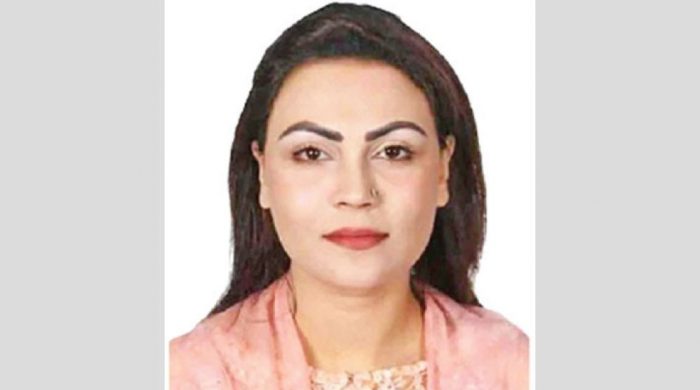
Audite Karim: Writer and Playwright