Middle East crisis and internationalism of Shaheed Zia’s leadership

- Update Time : Thursday, April 2, 2026
- 49 Time
Tensions in the Middle East, or the prospect of military conflict, have had far-reaching consequences not only regionally but also on the global economy and politics. Even though Bangladesh is not a direct participant in this conflict, it is not immune to its multifaceted impacts. The energy sector is the most visibly affected. As the Middle East is one of the world’s main oil suppliers, any escalation in conflict drives up international oil prices.
This, in turn, increases Bangladesh’s import expenditure, raising costs in transport, electricity generation, and industrial sectors. However, Prime Minister Tarique Rahman has decided to absorb the price increases through government subsidies or special incentives, aiming to ease public hardship. While prices have risen in neighbouring countries, the market situation in Bangladesh remains notably different. For the people, this is a timely, strategic, and innovative decision by the Head of State.
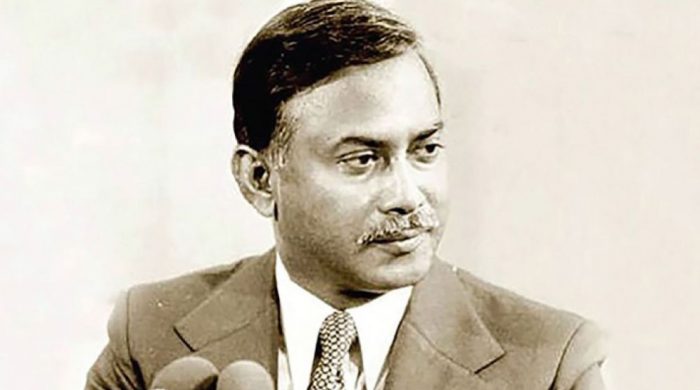
The late President Ziaur Rahman played an exceptionally visionary and strategically important role in developing Bangladesh’s relations with the Middle East. During his tenure, Bangladesh’s diplomatic and economic ties with countries such as Saudi Arabia, the United Arab Emirates, Kuwait, and Qatar gained new dimensions. Particularly significant was his 1977 visit to Saudi Arabia, through which he established close ties with the Saudi leadership and opened new avenues for bilateral cooperation.
The visit had long-term positive impacts across labour markets, economic collaboration, and religious connections. A symbolic and historic aspect of this visit was his gift of a neem tree sapling to King Khalid bin Abdul Aziz, now famously known as the “Zia Tree.”
He leveraged Bangladesh’s historic and cultural bonds with the Muslim world to strengthen active engagement with the Organisation of Islamic Cooperation (OIC). As a result, Bangladesh gained recognition internationally as a key Muslim nation. At the same time, President Zia took a firm stance in favour of the Muslim Ummah in various Middle Eastern political crises, including the Palestinian issue, establishing Bangladesh as a responsible and principled state.
Such diplomatic initiatives by Ziaur Rahman solidified Bangladesh’s international standing. Under his decisive leadership, the Bangladeshi labour market in the Middle East opened for the first time, laying a lasting foundation for the country’s future engagement in the region. This later evolved, under his spouse and three-time successful Prime Minister Begum Khaleda Zia, into a major driving force of the nation’s economy. Gradually, the remittances from overseas workers strengthened Bangladesh’s foreign currency reserves, positively transforming the rural economy. Women’s empowerment and employment opportunities left a lasting impact on the social system.
In the current context, facing new global and regional political challenges, the farsighted initiatives of President Ziaur Rahman and Khaleda Zia remain highly relevant. Undoubtedly, Bangladesh’s diplomatic relations with Middle Eastern countries today are rooted in Zia’s balanced and pragmatic foreign policy. Amid today’s global instability, the relevance of that policy and vision is felt even more profoundly in the ‘Bangladesh First’ principle of his worthy successor, Prime Minister Tarique Rahman.
At the outset of Bangladesh’s journey from a long period of fascist rule towards democracy, there is no room to underestimate such global crises. Rather, now is the time to play a firm and effective role both domestically and internationally, demonstrating competent governance internally while providing capable leadership on the global stage—just as the late President Ziaur Rahman did.
The Iran–Iraq War at the start of the 1980s was one of the most profound crises in Middle Eastern history. When these two key Muslim states engaged in a bloody conflict, it became a major concern for the entire Muslim Ummah. In such circumstances, President Ziaur Rahman adopted a balanced, responsible, and peace-oriented diplomatic stance. He did not take sides but urged both countries to engage in dialogue and seek compromise. This position reflected his integrity and foresight, establishing Bangladesh internationally as a neutral and peace-loving nation. His strong leadership in this regard remains unforgettable.
Especially on the OIC platform, he emphasised unity, solidarity, and mutual cooperation among Muslim nations. Ziaur Rahman believed that internal conflicts within the Muslim world only encourage external interference and hinder overall development. Therefore, he supported the OIC as an effective mediator. His diplomatic efforts were aimed at conflict resolution, fostering mutual respect, and consolidating the collective strength of the Muslim world.
Meanwhile, Bangladesh commemorated its Independence and National Day with due dignity after a long period. Through a military parade, the country celebrated its 55th Independence Day. Although the state of Bangladesh formally emerged in 1971, its seeds were sown long before. After the fall of Bengal’s sovereignty at the Battle of Plassey in 1757, the people of the subcontinent gained India and Pakistan—yet the exploitation and subjugation of Bengalis under West Pakistani rule soon resumed.
East Pakistan, today’s Bangladesh, resisted this exploitation and oppression. The linguistic movement of 1948 led to the 1952 Language Movement, the 1954 United Front election victory, the 1956 Constitution movement, the 1958 anti-military movement, the 1962 anti-education commission protest, the 1966 Six Point Movement, the 1968 Agartala Conspiracy Case, and the 1969 blood-soaked mass uprising—all these events heightened the Bengali aspiration for independence.
On 26 March 1971, the call for independence arrived. On the night of 25 March, the brutal Pakistani armed forces conducted ‘Operation Searchlight’ nationwide, attempting to silence the Bengali nation permanently. By imposing war on a comparatively weaker adversary, they intended to eliminate East Pakistan. But their dream was shattered, and within nine months, a sovereign, independent state was born.
It is said that nature fills a vacuum, either through time or through human action. On that fateful night of 25 March, Major Ziaur Rahman stepped in to fill the leadership vacuum.
Even before 26 March, strong resistance formed in Chittagong against the armed ship ‘Swat.’ Barricades were erected across the city to prevent weapons from being offloaded to the Western forces. Bengali soldiers were employed in clearing these barricades until 10 pm At 11 pm, the commanding officer of the 8th East Bengal Regiment, Lieutenant Colonel Abdur Rashid Janjua, suddenly ordered the regiment’s second-in-command, Major Ziaur Rahman, to take a company of troops to the port. Amidst this tense situation, Major Zia, thinking of the country’s welfare and independence, gathered his fellow officers, JCOs, and soldiers, declared rebellion against the Pakistani government, and outlined the war plan. Around 2:15 am on 26 March, this courageous hero proclaimed the nation’s independence.
On the evening of 27 March, Major Zia went to the Kalurghat Radio Station in Chittagong. The radio staff, ecstatic to see him, realised that the independence of Bangladesh was in the hands of this young officer. They repeatedly announced that Major Zia would speak within fifteen minutes. But what would he say? He drafted one statement after another, tearing them up, until in about ninety minutes, the historic declaration was finalised and broadcast in both Bengali and English, quickly spreading nationwide and internationally. This announcement inspired ordinary citizens to join the fight and established Bangladesh’s presence on the global stage.
Major Ziaur Rahman’s decision was timely, courageous, and strategic. Had he not called for rebellion promptly, the situation might have taken a different turn. Yet, due to political reasons, many today hesitate to acknowledge his bold decision and declaration of independence.
The nine-month bloody war from 26 March 1971 culminated in victory on 16 December, marking the emergence of Bangladesh on the world map. A new 56,000-square-mile territory was adorned with the red and green flag. Subsequently, Ziaur Rahman returned to military service.
Notably, had independence not been achieved, he would have paid the ultimate price. The very call he issued, which mobilised seventy million people to fight, could have led to his execution. Yet, driven by deep love, affection, and responsibility for his country, he took that risk. Historians note that after Sheikh Mujibur Rahman’s arrest on 25 March, Major Zia’s audacious actions became the decisive force shaping the momentum of the liberation struggle.
His declaration of independence is even documented in secret CIA files. The language he used was preserved exactly as he delivered it. Later, figures such as US President Jimmy Carter, Indian President Morarji Desai, and many others in regional and international forums acknowledged Ziaur Rahman as the declarer of Bangladesh’s independence. The Guardian and other major media outlets have also documented his feats, and they are recorded in the fifteenth volume of the first published ‘Liberation War Documents’ in November 1982.
Even India’s then-Prime Minister Indira Gandhi, on 6 November 1971 at a seminar at Columbia State University, New York, stated: “Sheikh Mujib has not yet declared Bangladesh’s independence. He seeks a peaceful resolution, which is still possible.” This remark was later compiled in the book India Seeks. In 1978, during a state banquet in Delhi in honour of Ziaur Rahman, India’s then-President Neelam Sanjiva Reddy told him, “You were the first to declare Bangladesh’s independence.”
After the war, Sheikh Mujibur Rahman assumed power in independent Bangladesh. Having been outside the country for nine months of the liberation war, he could not grasp the realities and sacrifices of the people. Soon, opportunists and corrupt elements surrounded him, resulting in political instability.
Moreover, in the fragile, war-ravaged economy, corrupt associates exploited the country like octopus tentacles. Looting and mismanagement ensued, as if past oppression had returned. Sheikh Mujibur Rahman even established ‘BAKSAL’ (Bangladesh Krishak Sramik Awami League) at one point.
Alongside curtailing press freedom, citizens’ political rights were stripped away. The nine-month struggle against exploitation, oppression, and atrocities seemed obliterated overnight under Mujib’s authoritarianism. A country earned with the blood of millions of martyrs was instantaneously reduced to the “bottomless basket” of a state.
Once again, the late President Ziaur Rahman emerged as a saviour. He reached the centre of power and ushered in a revolutionary Bangladesh. Following the establishment of democracy and good governance, he undertook multifaceted initiatives to revitalise the agriculture-based economy. His ‘Green Revolution’ brought smiles to millions of previously hungry faces.
Through his initiatives, food production increased, the rural economy regained vitality, empty fields were replenished with rice and other crops, and livestock thrived under golden sunlight. Internationally, Zia became recognised as a visionary leader and a true dreamer of a progressive Bangladesh.
Following the 1990 mass uprising, Bangladesh returned to a democratic path. After the passing of the country’s most successful three-time Prime Minister and Mother of Democracy, Khaleda Zia, leadership of the Bangladesh Nationalist Party (BNP), founded by the great liberator President Ziaur Rahman, passed to his worthy successor and national figure, Tarique Rahman.
Under Tarique Rahman’s leadership, the BNP formed a government with a strong majority through a credible election, with the single aim: “Bangladesh First.”
The people now expect from the leadership not only to ensure domestic stability but also to play an effective role in addressing global crises. Upholding national interests while advocating for global peace is the demand of the hour. Accordingly, despite numerous challenges, the Prime Minister of the People’s Republic of Bangladesh, Tarique Rahman, is providing capable leadership domestically and playing a strong role in the Middle East crisis.
Within just one month of government formation, several manifesto promises have been implemented: the Family Card, Farmer Card, Ed-Tech development, revitalising the fragile economy, securing women’s rights, providing incentives for farmers, healthcare initiatives, and more. Experimentally, 3,756,700 families have received the Family Card, with plans to expand coverage to 5 million and eventually nearly 20 million families.
In addition, canal-digging programmes across the country are being implemented to realise the nationalist vision and Green Bangladesh dreamed by the late President Ziaur Rahman. To modernise and empower farmers, a digital identity card, the ‘Farmer Card,’ will be distributed nationwide from 14 April. Using this card, farmers can directly access government subsidies, loans, and ten types of assistance, including seed and fertiliser support.
The current generation and the people of Bangladesh are supporting these rapid initiatives, measures, and decisions of Prime Minister Tarique Rahman, establishing him as a special envoy of Bangladesh’s renaissance. By following the path of his father’s visionary patriotism and mother’s tireless dedication to the people, he is poised to emerge as a true “Nation Dreamer.”
Author: Professor, Department of Marketing, University of Dhaka