Govt, opposition debate constitution reform council

- Update Time : Monday, March 16, 2026
- 35 Time
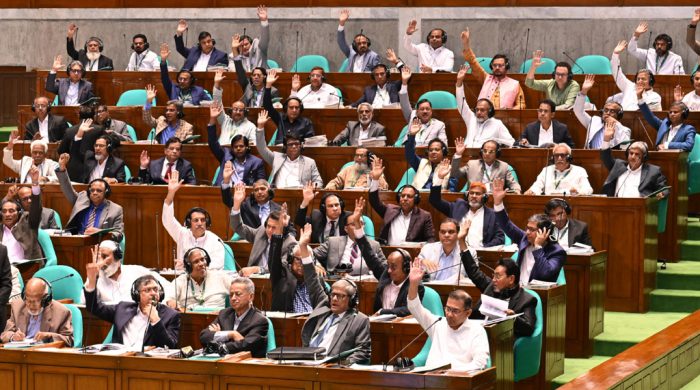
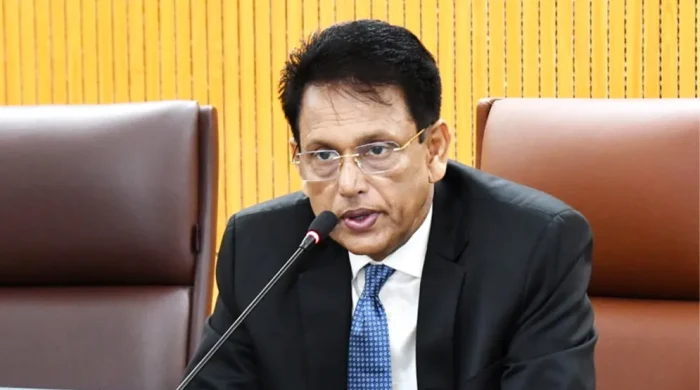
Home minister Salahuddin Ahmed told the Jatiya Sangsad that the constitution reform council had no constitutional basis as leader of the opposition Shafiqur Rahman demanded that a session for the council be convened in line with the July Charter Implementation Order.
Home minister Salahuddin Ahmed said that the constitution must be amended before implementing the referendum result, describing the July National Charter Implementation Order, 2025 as illegal and questioning whether the constitution could be changed under an unlawful directive.
He made the remarks in parliament in response to a point of order raised by opposition leader Shafiqur Rahman, who criticised the government for failing to convene the first session for the constitutional reform council within the timeframe set in the July National Charter Implementation Order, 2025.
Shafiqur told the House that Order No 10 required the first session of the council to be convened within 30 calendar days of the declaration of the Jatiya Sangsad election results, following which the first JS sitting was used to be summoned.
‘Today marks the 30th day, yet no initiative has been taken so far in this regard,’ he said.
The opposition leader, who is also the chief of the Bangladesh Jamaat-e-Islami, said that the implementation order stipulated that newly elected public representatives would simultaneously serve as members of both the Jatiya Sangsad and the constitutional reform council.
‘We want to utilise this opportunity,’ he said, adding that 77 opposition members had already signed the required schedule after taking their oaths in accordance with parliamentary rules.
Referring to the referendum, Shafiqur said that about 70 per cent of the voters had supported constitutional reforms.
Citing provisions of the implementation order, he said that if the referendum question received an affirmative majority vote, a constitutional reform council would be formed immediately after the order’s issuance with the representatives elected in the subsequent parliamentary elections.
However, Shafiqur said, the council had not been formed and the stipulated timeframe expired on Saturday.
Responding to the opposition leader’s remarks, Salahuddin said that the president could promulgate an ordinance only when the Jatiya Sangsad was not in session.
‘However, changes to constitutional provisions or constitutional amendments can’t be introduced through an ordinance. That is not permissible,’ he said.
Salahuddin also said that the July National Charter Implementation Order, 2025 appeared to be an imposed arrangement that raised legal and constitutional questions.
‘The question therefore arises — this order is neither an ordinance nor a recognised constitutional instrument; it appears to be something in between,’ the minister said.
He also criticised the oath taken by members of the proposed constitutional reform council, saying that they had taken it unconstitutionally.
According to the minister, the opposition leader had asked the president to convene the council under Article 72 of the constitution.
But since the council has no constitutional basis, the prime minister cannot advise the president to summon such a session and the president also cannot do so, he said.
Salahuddin said that the Jatiya Sangsad must be cautious about legislating on issues that could easily be challenged in court.
‘We must consider both sides and move forward in a lawful and constitutional manner in the greater interest of the nation,’ he said.
Under Article 72, the president summons the Jatiya Sangsad and under Article 73 he determines the time and place of the session, Salahuddin explained.
‘Accordingly, the president has delivered his address. Our opposition colleagues chose not to listen to that and left the chamber. A proposal from the opposition has been placed to allocate 50 hours for discussions on the address,’ the minister said.
Salahuddin said that the government respected the referendum outcome but it had to be implemented through constitutional procedures.
‘The people’s verdict must be respected, but it has to be done through constitutional and legal processes. The state does not run on emotion, it runs according to the constitution and the law,’ he said.
The minister described the July National Charter as a historic political agreement, adding that the government was committed to respect every word of it.
‘But whether the constitution can be amended through any imposed or unlawful order outside the July charter is a significant legal and constitutional question,’ he said.
The minister also noted that the referendum ballot had included four questions, one of which, he said, had been introduced through the order although it was not part of the original consensus on the July National Charter.
He reiterated that the constitution must be amended first if the referendum verdict was to be implemented, after which the issue of members taking oath for the constitutional reform council could arise.
However, he expressed the doubt about whether a constitutional amendment bill could be introduced in the current JS session, noting that 133 ordinances had already been placed before the House for scrutiny by a special committee that must submit its report within 30 calendar days.
He also pointed out that a 15-day recess was approaching, making it difficult to hold another sitting before March 29, and suggested that the issue could be taken up during the upcoming budget session if the business advisory committee allowed it.
Salahuddin proposed that the matter be discussed in the business advisory committee to determine when a constitutional amendment bill could be introduced, adding that parliament should debate the issue thoroughly before taking a decision.
‘We have come this far by following the constitution and we will continue to do so. In the days ahead, we will take the state forward in a constitutional manner,’ he said.
At the close of the second day of the 13th Jatiya Sangsad first session, opposition leader Shafiqur told reporters that if the crisis over the formation of the constitutional reform council was not resolved within the Jatiya Sangsad, they would take to the streets.