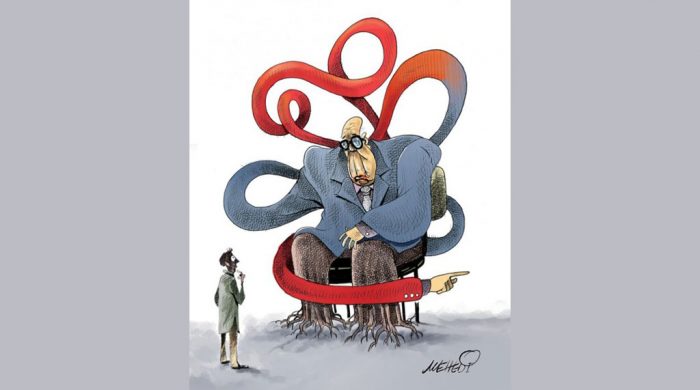
US-Israel-Iran: Three Narratives of Victory

- Update Time : Wednesday, March 11, 2026
- 70 Time

The international alignment is no longer what it once was regarding President Trump’s position on negotiations or war with Iran. It has largely shifted, if not entirely, toward rejecting the war and refraining from direct involvement in it, at least for now. The early image of the war is still being shaped primarily by the positions and actions of its three main parties: the United States, Israel, and Iran. Each of these parties views the conflict as carrying almost fateful consequences for its future. The situation is further complicated by the world’s limited understanding of the reasons behind the outbreak of the war, as well as by the divisions within the United States and the broader Western world regarding how it should be addressed.
Israel’s domestic and foreign policies have been based on the idea that war with Iran is not merely a means, but an objective in itself. Israel has demonstrated an effective ability to draw the United States into this confrontation. For Prime Minister Benjamin Netanyahu personally, such a conflict has also appeared as a potential escape from his mounting political crises at home, especially after the prolonged war in Gaza and its regional extensions exhausted much of his political capital.
President Trump, as we have seen repeatedly, tends to oscillate between one decision and its opposite, often without deep strategic calculation or sufficient knowledge of the mechanisms involved. Another feature that distinguishes his approach from that of his predecessors is his treatment of both rivals and allies. He confronts competing powers aggressively while simultaneously exerting pressure on allied countries, guided by an exaggerated belief in America’s ability to resolve complex international crises. His policy often appears rooted in a simple principle: whoever does not follow Washington blindly should expect punishment comparable to that reserved for enemies.

Iran’s policy has long been characterized by an embrace of ambitious objectives while often sacrificing achievable opportunities in their pursuit. The goal has been to build a great country without fully accounting for the costs of “greatness”. The country has pursued nuclear capabilities while insufficiently weighing the economic and political price required to sustain and complete such a project. At the same time, Iran has devoted extensive resources to military programs and regional influence, even as strict international sanctions pushed the country into severe economic crises. These pressures would have constrained development in any ordinary state, let alone in a heavily sanctioned country that has effectively imprisoned itself within the strategic vision of becoming a superpower.
None of the parties involved is free from responsibility for the current situation. Each has made significant miscalculations that have contributed to a war whose duration, trajectory, and consequences remain uncertain. Now, as the conflict enters its second week, none of the three actors possesses the clear conditions required for decisive victory. A true victory would require recognition by all sides that the objectives of the victor have been fully achieved and that the defeated party accepts its defeat. Such recognition would mean that the war could not easily resume in the future.
The United States under President Trump, together with its Israeli partner, possesses enormous destructive power. In purely military terms, they could inflict devastating damage on Iranian cities even without resorting to nuclear weapons. Israel, under Netanyahu, has already levelled Gaza to the ground, and is going on to do the same against Hezbollah in Lebanon while maintaining pressure on other regional fronts.
Iran, however, possesses a different form of resilience. Its capacity for endurance goes beyond its drone stockpiles, which immeasurably exceed its stockpiles of enriched uranium or its arsenal of ballistic missiles. The regime relies on a deep reservoir of “glorious stubbornness” and ideological determination. Preserving what it considers its lost national dignity and prestige has become central to its strategy, even if doing so takes on a Karbalian turn. In such a mindset, the continuation of struggle may be seen as preferable to compromise, even if the costs are immense.
In reality, each of the three actors knows the possible paths that could lead them out of this crisis. Yet they continue to act in ways that close those paths rather than open them. Let us begin with the United States, the most powerful actor and the one whose decisions largely determine whether wars begin or end. Under Trump, a practical exit has been repeatedly presented through proposals supported by Arab, Islamic, and broader international consensus. These proposals do not require Washington to abandon Israel, but instead seek a balanced and comprehensive settlement in which the wolf does not die and the sheep does not perish. Such arrangements aim to produce compromise solutions in which no party is entirely defeated and none entirely victorious. Instead, it benefits all parties without prejudice to their rights in the present and future.
Since the first day of its establishment to this day, Israel has fought numerous wars in which it has achieved battlefield victories. Yet these victories have not provided lasting security. The fundamental reason lies not in any lack of military capability, but in the continued occupation of Palestinian land and the expansion of settlements. Israel has repeatedly turned away from Palestinian, Arab, Islamic, and international initiatives aimed at resolving the conflict. Instead, it has pursued policies that seek the impossible goal of permanently “exterminating” the Palestinian people rather than reaching a sustainable political settlement. In this context, Netanyahu’s remark that Israel must remain permanently armed may be one of the most revealing and realistic statements he has made.
Iran also had multiple opportunities to avoid reaching this stage of confrontation. Many avenues remained open and some may still exist. These options would have required abandoning the illusion of imperial grandeur and adjusting national ambitions to realistic capabilities. They would also have required building cooperative relationships with neighboring states rather than confronting them. Even now, despite the horrors of war and the uncertainty surrounding its outcome, it is not yet inevitable that such possibilities have disappeared entirely.
Victory, according to the logic of each party, takes a different form.
For Iran, victory may simply mean survival. As long as the regime remains intact and the goal of overthrowing it is not achieved, Tehran can claim success regardless of the war’s material losses.
For the United States, victory may be defined politically rather than militarily. If President Trump declares the outcome a success, it may be presented as such to the American public.
For Israel, victory may also be framed domestically, shaped by internal electoral calculations regardless of the strategic costs incurred.
_________________________________________________
The writer is the Ambassador of Palestine to Bangladesh