Women’s affairs reforms still on paper

- Update Time : Sunday, March 8, 2026
- 33 Time
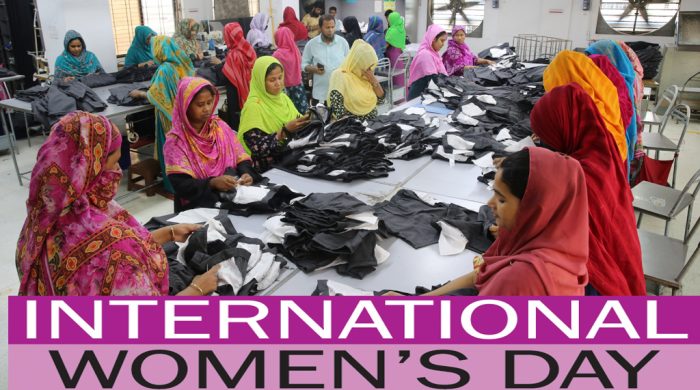
The post-July uprising Bangladesh has witnessed hardly any progress in eliminating discrimination against women and ensuring their rights to property and political participation as the recommendations of the women’s affairs reform commission have remained largely on paper.
Rights campaigners have demanded that the new Bangladesh Nationalist Party-led government, elected through the 13th Jatiya Sangsad elections in February, implement the recommendations of the reform commission, formed by the immediate past interim government.
Women and children affairs minister Abu Zafar Md Zahid Hossain told New Age on Friday that the new government would look into the commission report and consult experts to determine the next course of action in this regard.
‘We will look into the reform commission’s report and recommendations to address discrimination against women. We will consult experts to finalise the next course of action on the matter,’ the minister added.
The women’s affairs reform commission on April 19, 2025, submitted 433 recommendations to Muhammad Yunus, the then chief adviser of the interim government.
The recommendations included the introduction of equal property rights for women, a uniform family code, and a separate and permanent women’s affairs commission.
Eliminating all discrimination in the public space and family laws, increasing the total number of seats in the parliament to 600, with half of the seats reserved for women through direct elections, were also proposed.
Women’s affairs reform commission member Kamrun Nahar, also programme director at women’s rights campaigning non-government organisation Naripokkho, said that the approval of the Workplace and Educational Institutions Sexual Harassment Prevention Ordinance, 2026, and the Domestic Violence Prevention Ordinance, 2026, were an advancement.
On January 29, the interim government approved the ordinances.
However, Nahar said that the interim government’s negligence to address online offences against women’s rights campaigners, and verbal abuse against women’s affairs reform commission members, were very much concerning.
Moreover, women’s participation in active politics, especially in the parliamentary system through directly contesting the national elections, was largely ignored, she said, citing the lowest number of elected women in the new parliament.
In the 13th Jatiya Sangsad elections, only seven women were elected as lawmakers.
As a member of the reform commission, Nahar urged the government to pass the ordinances during the first session of the new parliament.
After receiving the report, Yunus gave directives to the ministries and divisions concerned to identify ‘immediately implementable’ recommendations.
He also reportedly said that the recommendations would be taken up with the political parties via the National Consensus Commission.
Nahar said that at least 71 recommendations were identified as immediately implementable ones.
However, none of the recommendations were discussed in the National Consensus Commission-held dialogues with political parties, ‘which marked the sheer negligence of women’s rights’, Nahar said.
Rights activist Ferdous Ara Rumee criticised the interim and previous governments for bowing to conservative forces that opposed mainstreaming women’s issues.
‘Some religious groups opposed and abused the women’s affairs reform commission, but the interim government remained silent,’ she said.
The reform commission recommendations were separated in two categories. Some of them were to be implemented during the tenure of the interim government, and some were for the next elected government.
Among the 15 specific issues, the commission gave a recommendation for introducing a uniform family code, according to which equal rights for all women and men will be ensured regardless of religion, ethnicity, or class.
Formation of a separate and permanent women’s affairs commission to observe, monitor and protect the rights of women, withdraw the two reservations on the Convention on the Elimination of All Forms of Discrimination against Women regarding reform of laws and women’s equal rights on marriage and divorce, and ratify and implement the ILO Charter C189 and C190 were among the recommendations.
Under the issue on ‘role of women in the public space: in national and local levels’, the commission recommended increasing the number of seats in the national parliament to 600, where in every parliamentary constituency there will be one general seat and one reserved seat for women and the lawmakers for each seat will be directly elected.
Under the participation in the economy and the right to property issue, the commission recommended ensuring women’s equal rights in inheritance, making women’s inclusion in agriculture easier, recognising women as fisherpersons and ensuring women’s right to forest resources.
The commission also recommended ensuring women’s minimum age for marriage at 18, protecting them from unexpected and risky pregnancies, establishing area-wise child care centres and residential hotels for working women, and ensuring a one-third representation of women in all local government institutions.
Review and reform of the existing laws for preventing violence against women and child, making the complaint filing system at police stations easier, provide special stipends for the victims of child marriages, provide relevant sex education to all in all educational institutions, a six-month maternal leave and a two-week paternal leave in all sectors, women and men’s equal opportunity for participation at all levels of all kinds of sports, among others, were included as recommendations.
Citing several crimes against women and children since the new government took office, rights activist Ferdous said on Saturday that both ruling and opposition parties had not shown a bold stance against such offences.
‘It is hard to be optimistic about the reform commission’s recommendations now. Without political consensus, women’s crises will not be resolved,’ she said.