Road minister under fire for comment over extortion

- Update Time : Saturday, February 21, 2026
- 23 Time

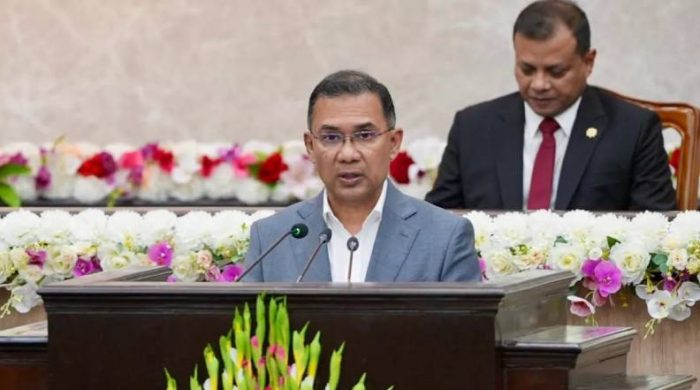
Newly appointed minister for road transport and bridges, railways and shipping Sheikh Rabiul Alam has come under heavy criticism for his comment that he does not consider the money collected in the name of organisations of road transport owners and workers on mutual understanding as extortion.
‘Irrespective of the way he has tried to defend extortion, he has clearly failed to consider that he is not only trying to normalise extortion but also justifying the passing of the impact of such extortion and collusive corruption to the people,’ said Transparency International Bangladesh executive director Iftekharuzzaman.
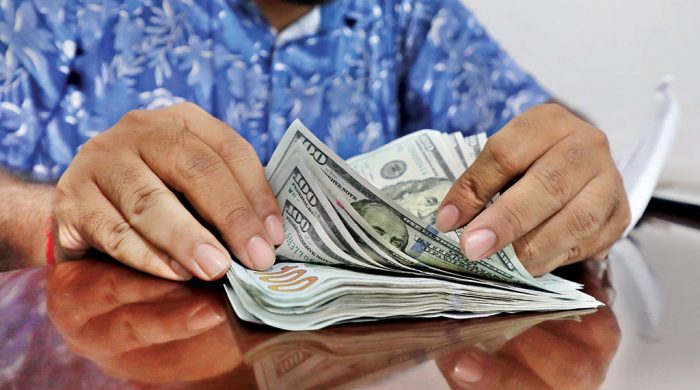
As per a study conducted by the anti-corruption watchdog in 2024, private bus companies in the country pay Tk 1,059.37 crore annually as bribes to the Bangladesh Road Transport Authority, traffic and highway police, representatives of municipalities and city corporations, political leaders, transport owners’ and workers’ organisations.
Whether it is mutual understanding or not, this is ultimately extortion and the consumers are the worst sufferers, said Consumers Association of Bangladesh general secretary Humayun Kabir Bhuiyan.
‘As consumers, we strongly protest at the minister’s comment,’ he added.
Rampant extortion in the road transport sector by different owners’ and workers’ organisations continues across the country.
In response to a question on extortion in the sector, Rabiul on February 19 at a press conference at the road transport and bridges ministry in the Bangladesh Secretariat said, ‘…From our perspective, we do not see the scope for considering it as extortion as they are doing it on the basis of mutual understanding.’
The minister joined office on February 18 after taking oath as minister in the previous day.
Rabiul also said that the organisations of owners and workers spent the collected money for their welfare.
‘Extortion is something when someone does not want to pay it but pays it under coercion,’ the minister said, adding that there might be a debate about how much money was used for the welfare purposes, but they did the collection based on mutual understanding with the worker federations.
The TIB revealed the study on March 5, 2024, which also showed that 92 per cent of owners or executives of major private bus companies were directly involved in politics and 80 per cent with the then ruling Awami League, which was ousted on August 5, 2024, in the wake of a mass uprising.
Iftekharuzzaman told New Age on Friday that although they did not update the 2024’s study, but it could easily be assumed that at present the amount of extortion increased.
‘The minister’s interpretation of extortion is directly contradictory to the pledges against corruption strongly announced by nearly every minister, including himself, who have so far spoken to the media,’ he said.
He also said that ‘more importantly it undermines the ruling party’s election manifesto and the head of the government’s address to the nation less than 48 hours before the road minister came up with this self-defeating stance.’
‘Unless the government wants that this is taken as a blatant example of how the ruling party may turn its anti-corruption pledges into eyewash, the government should disown the minister’s statement immediately and he should be held to account,’ Iftekharuzzaman said.
It was deeply disappointing, especially because of the countrywide replacement of actors in extortion witnessed soon after the fall of the Awami League’s autocratic rule, he added.
Passenger Welfare Association of Bangladesh, a rights-based non-government organisation, secretary general Md Mozammel Hoque Chowdhury said that as per their research, only from buses each year about Tk 1,000 crore was extorted.
‘The amount of extortion increased during the interim government period due to about 60 lakh battery-run rickshaws on roads across the country,’ he said, adding that this amount might be 10 times higher compared with the buses.
Mozammel said that some owners’ and workers’ associations and some dishonest police officials were involved in extortion in the sector.
Mentioning the then Awami League government’s shipping minister Shajahan Khan, who was also executive president of the Bangladesh Road Transport Workers Federation, Mozammel said that it indicated that where the extorted money went.
He also said that it seemed that the new minister was trying to get favour of the transport leaders by saying these.
‘The worst sufferers of extortion are the common people,’ Mozammel said, adding that they had to pay extra transport fare.
He added that the passengers were also affected by increased goods prices due to the same reason.
CAB general secretary Humayun Kabir Bhuiyan said that if a newly appointed minister talked like this, then where the consumers would go to.
‘We are drawing the attention of the prime minister to this issue,’ he added.
Dhaka Road Transport Owners Association general secretary Md Saiful Alam brushed aside the allegation of extortion, saying that they collected fixed amount of money from the owners and workers to carry out their operational expenditure.
He claimed that during the Awami League government’s period, some ‘invisible quarters’ extorted money on roads while the associations collected money only at terminals.
Bangladesh Institute of Labour Studies executive director Syed Sultan Uddin Ahmed said that workers’ federations and owners’ federations were allowed to collect subscriptions from their respective members for welfare purposes, in line with their constitutions.
However, he said that collecting money by stopping vehicles on roads in the name of welfare was unacceptable.
Iftekharuzzaman also said that the topmost priority of the ruling party should be to urgently determine how it could reform and cleanse itself of the culture of treating political positions as licence for power.
‘If failed, it will be hard to prevent the opening of floodgates of corruption and going back towards autocracy by which people who voted them to power had suffered for so long,’ he added.
Under the Bangladesh Labour Act, 2006, every eligible company is required to establish a Workers’ Participation Fund and a Workers’ Welfare Fund.
In accordance with Section 234 of the law, companies must set up these funds as part of their statutory obligations.
The act stipulates that any company with a minimum paid-up capital of Tk 1 crore or immovable assets worth at least Tk 2 crore must allocate 5 per cent of its net profit to workers’ welfare.
Of the contribution, 80 per cent is deposited in the participatory fund, 10 per cent in the company’s welfare fund, and the remaining 10 per cent is transferred to the workers’ welfare fund established under the Bangladesh Workers’ Welfare Foundation Act, 2006.
The government has constituted the fund to support the welfare of working people.