BNP to launch nationwide campaign on reforms, elections

- Update Time : Tuesday, September 16, 2025
- 64 Time

The Bangladesh Nationalist Party has decided to launch a nationwide campaign to inform the public of its position in response to the ‘smear campaign’ against the party over reforms and to press its demand for elections within the timeframe announced by the government.
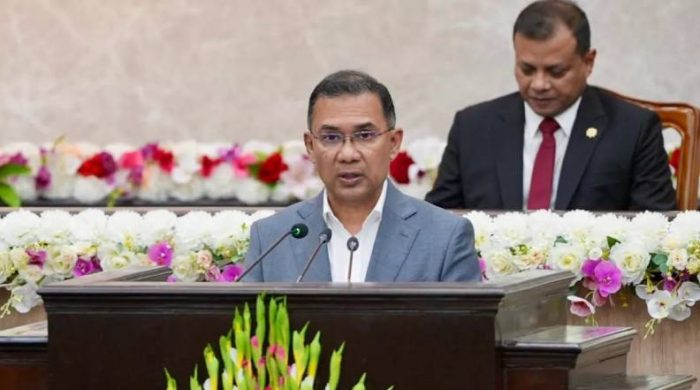
The decision was taken at the party’s national standing committee meeting on Monday night, chaired by its acting chairman Tarique Rahman.
Several members of the party’s standing committee, present at the meeting, said that ahead of the election, the BNP’s upcoming programme would be primarily promotional and would be carried out nationwide, from the central level down to union and ward levels.
The move came as at least four Islamic parties separately declared parallel programmes on Monday to press five common demands, including the implementation of the July Charter before the national elections and holding the next polls in February on the basis of the charter.
BNP leaders, however, said that their strategy was different, as they aimed to reach people nationwide to clarify the party’s stance on reforms ahead of the elections.
During the meeting, the standing committee also discussed the July Charter, resolving that reforms must always remain constitutional and lawful.
Members stressed that any constitutional changes must be carried out in line with the law to avoid future challenges to the government.
The committee reaffirmed that the BNP’s central agenda is to ensure elections are held at the right time, at the appropriate time, with preparations for the polls considered its top priority.
One of the standing committee members told New Age that although the BNP had already agreed to many reform proposals, the party was being unfairly targeted with claims that it opposed reforms or was obstructing its implementation.
He said that, through its upcoming campaign, the party would explain its true position to the public.
According to party leaders, the committee also decided that reforms which can be implemented under the authority of the current government should be enacted immediately, while those not feasible at present should be pledged for later implementation through parliamentary processes.
‘We have no objection to any reform, but it must be lawful. For those that cannot be done now, we will keep them in our pledges. Constitutional reforms cannot be imposed outside parliament. Law cannot be made without law,’ a standing committee member said.
The National Consensus Commission on August 16 shared draft charter with parties, contained a prologue outlining the historical context of reform, a list of 84 agreed issues, and a covenant prioritising the charter over the constitution while restricting legal challenges.
The covenant drew sharp criticism from several parties, who also demanded a legal foundation for the charter’s enforcement.
In response, the commission revised the covenant on September 10, stating that the charter would be annexed to the constitution or incorporated in an appropriate manner, binding only signatories from challenging it in court.
The following day, six alternative implementation options proposed by parties were revealed, ranging from a referendum, a special constitutional order and a constituent assembly to adoption by the 13th parliament, a constitution reform council, or an opinion from the Appellate Division.
Expert-panel recommendations also included adoption through an ordinance, an executive order, a referendum or a constitutional order.
However, due to differences among the parties, no single method was agreed upon for executing the July Charter.