Protein foods, energy costs keep pressuring household budget: BB

- Update Time : Sunday, November 1, 2026
- 108 Time
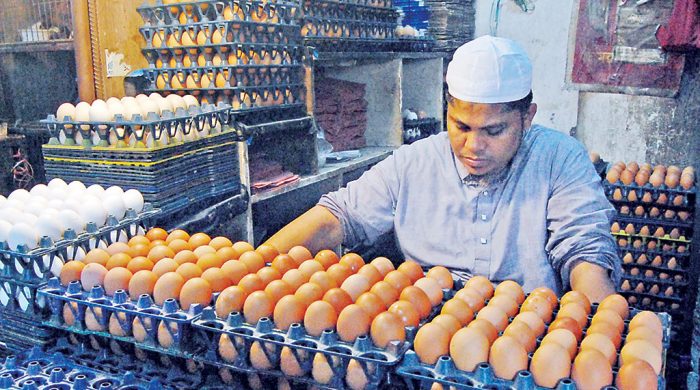
Rising prices of protein-rich foods coupled with soaring energy costs are squeezing household budgets, leaving families struggling to maintain their living standards despite a slight easing in overall headline inflation.
Milk, fish, eggs, meat and pulses accounted for 51.1 per cent of food inflation in July-September 2026, making them the largest contributors to rising food costs, according to Bangladesh Bank quarterly inflation report.
Vegetables’ share of food inflation dropped to 29.2 per cent from 37.0 per cent. Rice and wheat items contributed minus 21.4 per cent, which means they pulled the food figure down. Protein-rich food items stayed the largest contributor to food inflation.
The pressure on household budgets is also coming from energy costs, which could push up the prices of food and other essential goods in the coming months.
Energy inflation rose to 17.4 per cent in July-September from 17 per cent in the previous quarter, more than twice the overall inflation rate. Prices of solid fuels, including firewood, agricultural waste, cow dung and jute sticks, increased by 22.1 per cent year-on-year. These fuels are widely used by rural and low-income households that have limited access to gas and electricity.
Fuel and lubricant prices that directly affect transportation costs increased by 14.7 per cent, up from 13.8 per cent in the previous quarter.
Bangladesh Bank identified the recent increase in domestic fuel prices as a significant inflationary risk, as its impact was not yet reflected in the Consumer Price Index compiled by the Bangladesh Bureau of Statistics.
Higher fuel prices can increase transportation costs, raising the cost of moving food and other goods from producers to markets and eventually passing the additional burden on to consumers.
The pay, however, is not keeping up with soaring prices of food and cost of energy, making things worse at the household level. Wage growth slowed to about 7.9 per cent in September, while inflation stood at 8.3 per cent.
When prices rise faster than wages, each taka buys less. The report says inflation has outpaced wage growth for the past two years, so the loss in buying capacity has built up over time.
Imports add exposure to inflation. Items that are fully or partially imported contributed 27 per cent of inflation, up from 24.9 per cent, with these prices depending on exchange rates and global markets.
The International Monetary Fund expects average inflation of 10.9 per cent this financial year, while the Asian Development Bank expects 9 per cent.
Prices of some daily items moved sharply: green chili and onion prices rose, while green chili spiked in July before falling. Egg and potato prices rose while Sonali chicken prices fell, with rice, lentil and soybean oil prices staying broadly stable.
The rise in prices is also broad meaning the pressure is not limited to a few goods: In September, 203 of 382 items tracked in the Consumer Price Index showed rise in price, 25 showed fall, and 154 remained unchanged.