We are in climate emergency

- Update Time : Sunday, November 15, 2026
- 19 Time

COUNTRIES such as Bangladesh have for decades been taught to ask politely for help in a crisis that they did not create. We have learnt the language of resilience, adaptation and international cooperation. We have learnt to speak without blame, to appeal rather than demand and to express gratitude for whatever assistance the world’s powerful countries are willing to offer. But, what happens when the people responsible for much of the destruction are the same people that we are expected to thank for offering loans? Why are we still afraid to demand reparations after decades of injustice?
World leaders have gathered at Antalya, Türkiye, for COP31, the annual Conference of the Parties, where governments are negotiating how to confront climate change. At COP29 in Azerbaijan, at least 1,773 fossil fuel lobbyists were granted access, outnumbering almost every national delegation and the combined delegations of 10 particularly climate-vulnerable countries. When the people profiting from the crisis have that much access to the space meant to address it, whose voices are we really heeding?
The choice of hosts hardly inspires confidence either. The United Arab Emirates hosted it in 2023, Azerbaijan in 2024 and Brazil in 2025. The countries are petro-states. What struck me was how frequently the speeches emphasised resilience, appeals for climate finance and the contributions that these countries could make towards tackling climate change.
There is nothing inherently wrong with talking about resilience. Countries such as ours have demonstrated extraordinary resilience in the face of disasters. But, the language surrounding it frustrated me. Much of that language sounded like we were trying not to offend anyone. We were learning the language of the coloniser to ask for help rather than demand justice.
For decades, we have taught generations of diplomats and policymakers to speak without blame. We were taught to imply rather than accuse, negotiate rather than confront and remain civil when discussing the destruction of our own communities. Under the supposedly liberal democratic ideals that the United Nations was meant to uphold, our communication became business as usual. The colonial hangover of civility still haunted us.
The territory that is now Bangladesh endured centuries of colonial rule and economic extraction as part of British India. The wealth accumulated through that system helped to build the prosperity of the colonial power while the people subjected to it were denied control over their own resources and futures.
We often hear in academic circles about how Britain extracted $45 trillion from the Indian subcontinent from economist Utsa Patnaik’s estimate of colonial transfers between 1765 and 1938. While the methodology and scale of such estimates can be debated, the history of colonial extraction cannot simply be dismissed. That history is vital in discussions regarding climate change.
The countries that industrialised early accumulated enormous wealth through systems built on extraction, colonial trade and fossil fuels. The benefits of that accumulation have continued across generations, as have its consequences. Yet, when countries such as Bangladesh speak about those consequences, we are expected to sound grateful for whatever help is offered. We are supposed to recognise their selective amnesia and simply gloss over the abuse, extraction and violent colonisation while we negotiate our collective future. To obey the coloniser is to speak like the perfect victims. Even when we are humiliated and treated unjustly, we are expected to say nothing. We have been taught to mistake submission for diplomacy and gratitude for political maturity.
That is what I want us to challenge because we are no longer in a world where the west pays for our development. One can argue that we never were, as these liberal democratic methods were created in order to benefit one-way resource extraction endeavours from the east and the south to the west and the north. We are not asking for charity. We are asking why those who benefited most from the systems that created this crisis are not being held responsible.
There has been some hopeful movement in international climate negotiations, namely the Fund for Responding to Loss and Damage. The fund, established at COP27 in 2022 and put into force at COP28 in 2023, was deemed a victory for climate-vulnerable countries that had spent decades demanding recognition of the harm they were experiencing. The real master-stroke is how the term ‘loss and damage’ re-framed the idea of reparations, responsibility and justice to business as usual. Loss and damage can happen to businesses without anyone acknowledging injustice. A company can suffer losses or experience damage. These terms describe what happened without addressing who caused it.
What happened to the global south and what is happening now is not simply an unfortunate loss and we must stop addressing it as such. Simply put, climate change comes from global injustice. This is not a simple argument about a name. The west still benefits from wealth accumulated through centuries of extraction and industrialisation. That wealth provides resources for adaptation that poorer countries simply do not have. This is why the question of climate justice cannot be separated from the question of historical responsibility. We cannot keep discussing the emergency as though everyone arrived at this moment with equal resources, equal responsibility and equal power.
Paragraph 51 of the decision adopting the Paris agreement explicitly states that Article 8, which addresses losses and damage, does not provide a basis for liability or compensation. The international community can recognise that countries suffer devastating losses because of climate change, but the agreement deliberately stops short of establishing a legal basis for holding countries liable or requiring compensation. We can only acknowledge the destruction, discuss the cost of rebuilding, establish funds and congratulate ourselves for international cooperation while avoiding the question of responsibility so the conversation is within the language of ‘business as usual.’
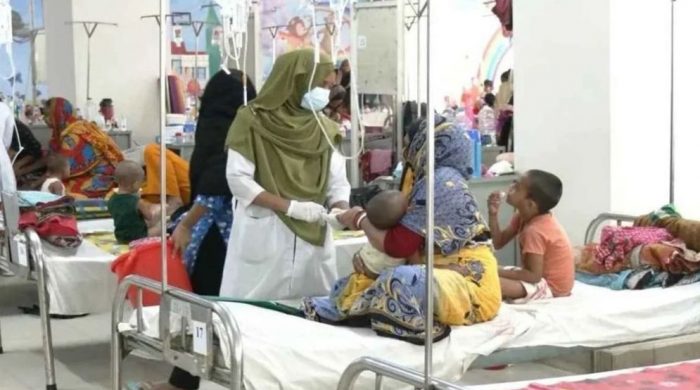
We know very well that business as usual is no longer an option. We are facing excessive heat, diseases, floods, droughts and salinisation of our fields and water. We should talk about who bears responsibility for the damage, has accumulated wealth while creating the crisis and why countries that contributed so little to global emissions must shoulder such enormous costs. The question is not merely about what has been lost. The question is who is owed.
Europe is not immune to the emergency. Heat-related deaths have reached devastating levels, with estimates exceeding 50,000 in the past year. The crisis is already here. Still, for many people in the global north, the climate emergency is still discussed as something that needs to be prepared for. For people across much of the global south, it is destroying homes, lives, livelihoods, infrastructure and the foundations of economic security.
We must shake the powerful from their ivory towers and speak about the injustice that continues to shape our lives. This casual detachment in the global north, where climate change is still treated as something distant to prepare for rather than a fire already raging directly shapes how the rest of the world is treated. If they do not recognise the root injustice, their help will never be anything more than a transaction. That is why when the international financial system steps in, it offers a bill instead of accountability.
In 2023, the International Monetary Fund approved about $1.4 billion for Bangladesh under its Resilience and Sustainability Facility, intended to support climate adaptation and mitigation. That financing may support important projects. But, it also points to a wider problem with how the international financial system responds to climate vulnerability.
According to the Organisation for Economic Co-operation and Development, 69 per cent of public climate finance provided by developed countries in 2022 came in the form of loans. Is this help or is this another form of exploitation? The countries that contributed very little to the accumulation of greenhouse gases are experiencing some of the most devastating consequences of climate change. Then, to recover from those losses or prepare for further disasters, they must borrow money which must be repaid with interest. When we bear the damage first, then take on debt to recover or protect ourselves from further harm, are we not paying double? Our government needs to challenge how these loans bind us in a loop. To do that, we must stop speaking the language of ‘business as usual.’ When we agree to play by the rules of business as usual where losses simply occur and damages simply happen, we risk losing the language necessary to describe the injustice committed against us.
Of course, climate finance is necessary and not every loan is inherently unjust. But, loans cannot be the default answer to the crisis that vulnerable countries did so little to cause. Where harm creates an obligation to repair, we should demand compensation. Climate reparations should not be something we are embarrassed to ask for.
This year, after devastating flash floods had struck Nepal, Nepal’s prime minister called out India, China, the United States and the west for their responsibilities for causing disasters. He spoke about responsibility and most importantly, asked for reparation. That word, reparation, matters.
The world seems deeply uncomfortable with the idea that climate change is not merely a collective problem requiring collective effort, but a question of responsibility. We are afraid of that word because it sounds like we are blaming someone. Indeed, we are and, indeed, we should.
Nepal’s prime minister also made it clear that Nepal was not there to blame any particular country or continent. He called for shared responsibility and solidarity, recognising that countries with greater historical responsibility and capacity must do more.
Climate-vulnerable countries do not have to resort to asking politely for help. They can question the structure of the international system outright. They can demand that the world not only acknowledges their suffering, but that it ensures that those who contributed in creating it accept the responsibility for doing so. They can insist that justice means more than another financing arrangement.
The world is comfortable recognising us as victims who do not dare speak about the injustices committed against them. We are expected to describe our suffering, demonstrate our resilience, express our gratitude and return home with whatever promises have been made. Then, when the next disaster arrives, we begin the process again. More appeals, negotiations, loans and promises.
But, it is not business as usual any longer. Climate change is eating away at our economic progress, destroying livelihoods and making the future increasingly uncertain for millions of people. We cannot continue pretending that the international system is fair simply because it allows us a seat at the table. A seat means very little if we are expected to remain polite while others decide what our suffering is worth. We must stop allowing the language of resilience to replace the language of responsibility. We must stop treating justice as charity. We must stop asking countries to lend us money to survive a crisis they played such a significant role in creating.
Climate emergency has laid the crisis bare. We cannot wait any longer. We cannot rephrase or re-frame our position. We have to set the narrative right. We make the reparations happen.
Sarker Shams Bin Sharif is a climate and migrant justice advocate.