Can the Awami League return through violence?

- Update Time : Thursday, November 12, 2026
- 41 Time

FOLLOWING its ouster in the July uprising, the greatest political challenge facing the Awami League has been to restore public trust. Given its long history of authoritarian politics and responsibility for the loss of unarmed lives during the uprising, the party was presented with a difficult path — one requiring self-reflection and political reform. However, by choosing instead to engage in violence, bombings, arson attacks and the creation of an atmosphere of fear, the party has further narrowed its prospects for returning to mainstream politics.
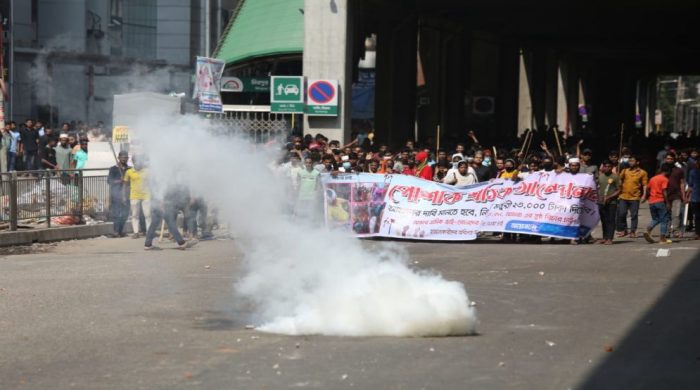
Recent incidents, including the torching of vehicles, detonation of crude bombs (cocktails), attacks on police and acts of sabotage against various facilities have brought this issue to the fore. Reports of violence across 16 districts on November 10 underscore the gravity of the situation; one bus driver has even lost his life. According to media accounts, targets have included government institutions, educational establishments, banks, airports and critical infrastructure such as the Padma Bridge. If these actions are intended as a prelude to the return of leaders who fled during the mass uprising, it is clear that the Awami League remains trapped in a cycle of misguided politics. Such events will only invite further catastrophe for the party’s political future.
For the Awami League, the question is no longer merely about returning to power or resuming political activities; the more fundamental issue is whether the party can ever earn the public’s trust and function as a legitimate, mainstream political party.
Violence is not the path to a political comeback
STATEMENTS and reports suggesting that Sheikh Hasina will return to the country in December have sparked a renewed surge of political activity among Awami League supporters. However, the political aspiration to return is not the same as creating a political environment conducive to such a return. In fact, attempts to exert political pressure through violence and acts of sabotage may only make the path to a comeback even more difficult.
If a political party wishes to regain public support, it must engage with the people, acknowledge its past mistakes and compete fairly against its political opponents. A party cannot achieve long-term political legitimacy by resorting to tactics such as bombings, setting vehicles on fire or endangering the lives of ordinary citizens.
The memory of the loss of life among unarmed people during the 2024 mass uprising continues to leave deep scars on the public consciousness. If, instead of healing these wounds, there are fresh allegations of violence, public anger will only intensify. There is a significant risk that the existing negative perception of the Awami League will become even more deeply entrenched.
Increased legal and organisational risks for party people
IF THE path of violence continues, Awami League leaders and activists could face several types of risks.
First, operations and arrests by law enforcement agencies against its party members in Bangladesh may intensify. In addition to those already facing cases, new incidents of violence could lead to further investigations and charges. Consequently, a significant number of the party’s grassroots-level members could become entangled in long-term legal complications.
Second, securing bail for those already in custody may become increasingly difficult. New allegations and evidence of violence could negatively impact bail hearings in court — though it should be noted that bail decisions remain entirely within the court’s discretion, and each case is evaluated on its own judicial merits.
Third, affluent and influential party members remaining in the country may face growing concerns regarding their personal safety and potential legal actions. Reports suggest that some have already begun leaving the country, aiming to protect their business interests and avoid the prospect of arrest. While some Awami League members were previously able to maintain a local presence through political compromises, the current situation has effectively closed off such opportunities.
Sustaining political violence requires both organisational capacity and financial resources. Therefore, if a link is established between acts of sabotage or violence and their funding, those providing the financial backing could also find themselves under investigation.
Should law enforcement agencies succeed in identifying the sources of funding, organisational channels and the individuals issuing orders behind the violence, the party’s organisational and financial networks will come under significant pressure. The repercussions would not be limited to grassroots members; political patrons and potential financiers could also face serious legal risks.
A return to the politics of confrontation with students?
ONE of the most concerning aspects of the recent violence is the reports of attacks targeting educational institutions and university campuses. During the July uprising, students stood at the forefront of the movement against the Awami League government — a movement that ultimately paved the way for the government’s downfall.
If investigations into recent bombings or acts of violence — directed at students, campuses or educational institutions — reveal the involvement of individuals linked to the Awami League, the implications would be politically profound. It would clearly demonstrate that, rather than engaging in democratic political competition, the party has chosen a path of confrontation against the very student body that drove its ouster from power.
Recent crude bomb blasts at various universities across the country, including the University of Dhaka, Jahangirnagar University, Jagannath University, North South University, and Southeast University, suggest that the Awami League harbours deep-seated resentment towards students.
The apparent satisfaction the Awami League derives from attacking those who led the July uprising makes it clear that the party views the entire ‘Gen Z’ generation as its adversary.
The future of any political party is, in part, defined by how it treats its opponents. The allegations that the party has resorted to physical attacks — rather than engaging its opponents through political means — raise even more serious questions about its democratic credentials.
The AL’s public image faces further crisis
FOR the Awami League, the greatest danger may not be immediate arrests, legal cases or organisational weakness; rather, it is how the party is being perceived by the public.
The memories of the loss of life and the brutal crackdowns during the 2024 mass uprising have severely damaged the party’s image. New allegations involving bombings, arson attack and the endangerment of ordinary citizens will only intensify these painful recollections.
At one time, the Awami League’s political identity was intertwined with the Liberation War and the nation-building process following Bangladesh’s independence. However, recent political experiences and allegations of violence have created a stark contradiction between that historical identity and the party’s current conduct.
If the party continues to engage in acts of terror, the public will increasingly view the Awami League as a violent political force. This will pose a major obstacle to any long-term political rehabilitation.
What must be done to return to conventional politics?
THERE is no easy path for the Awami League to make a political comeback. First, the party must abandon the path of violence and sabotage. Second, it must acknowledge political responsibility for the killings, crackdowns and human rights violations that occurred during the 2024 mass uprising and its tenure of power. Third, it must allow for impartial investigations and trials for those involved in these crimes, regardless of their political affiliation.
A return to conventional politics cannot be achieved merely by issuing a few statements or mobilising party activists on the streets. The top leadership, including Sheikh Hasina, must clarify whether they intend to evade accountability for past political errors and crimes or whether they are prepared to face the consequences.
Most importantly, the party must seek forgiveness from the people. Apologising is not merely a political tactic; it signifies an acknowledgement of past wrongs, a commitment to the victims and a guarantee that such events will not be repeated.
The Awami League has a long history in Bangladeshi politics. Yet, its historical legacy cannot grant it immunity for its present actions. A party’s past duration in power, its historical role during the Liberation War, or its previous contributions to governance cannot serve as a shield against accountability for current crimes.
If the Awami League believes it can re-establish itself as a political force by inciting violence and fear, it is making a grave political miscalculation. Such violence is the antithesis of the self-reflection, genuine remorse and democratic conduct required for a political comeback after losing power.
Ultimately, the Awami League faces two paths: it can continue a politics of violence and vengeance — thereby deepening its own political isolation — or it can acknowledge its past transgressions, seek forgiveness, face the legal process and attempt to return to democratic politics.
It is impossible for the Awami League to return to mainstream politics while evading justice, failing to apologise to the public and persisting in a politics of violence.
Ahammad Foyez is managing editor at New Age.